
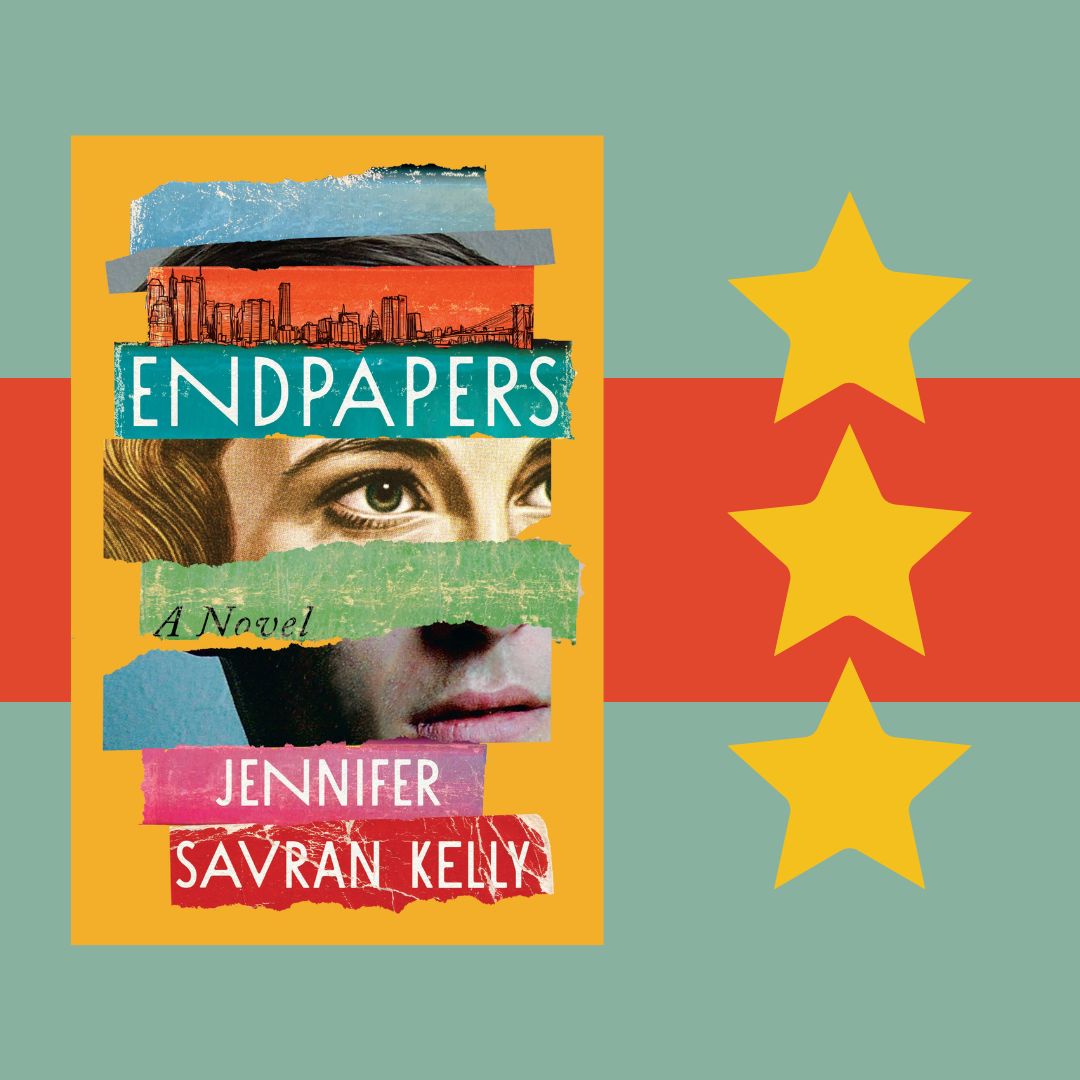

The further I get from my teenage years, the harder it is for me to remember the struggle to just be myself. (If I’m honest, I still worry that I’m too dorky or that I annoy people when I start sharing all the random knowledge I’ve acquired over the years as a reader and a librarian.) So it’s illuminating to read a book like Jennifer Savran Kelly’s moving novel, Endpapers, in which the protagonist constantly wrestles with their sense of self against their desire to be liked and loved by others. Even if that particular struggle doesn’t intrigue or appeal, I would still recommend this book to every reader because (speaking as a cis-gender woman) it’s one of the best books I’ve ever read about a non-binary person.
No one notices the emotional tightrope Dawn Levit walks. At home, Dawn eschews makeup and wears their* boyfriend’s clothes. At work, Dawn wears either shapeless clothing or skirts and dresses. They conform to whatever gender identity they think their company either wants or expects from them. It’s hard to fault them. When they were caught kissing their first girlfriend, Dawn’s father exploded with anger and violence. Since that traumatic experience, Dawn has always put others’ expectations ahead of their own comfort or preferences. It’s definitely not a comfortable life for them.
It’s hard to say how long Dawn might have continued that way—along with worries that their boyfriend might be bisexual or gay and that they might never succeed as an artist—if a curious thing hadn’t happened to them at work one day. In lieu of anything more artistic, Dawn works as a book repairer for an art museum. When they discover a book with water damage that needs a new set of endpapers and hinges, Dawn finds the cover of a lesbian pulp novel with a letter written in German on the back. The letter is written between two women but Dawn doesn’t discover what the text means until a friend translates for them. The letter’s contents and the ripped cover fascinate Dawn. Dawn is so fascinated, in fact, that they decide to track down the sender of the letter, a woman named Gertrude. I was impressed (really impressed and I do research for a living) at the way Dawn pieces together the few bits of information they have to find Gertrude.
Meeting Gertrude is a catalyst for Dawn. Seeing a woman who at least tried to embrace her identity as a lesbian (and possibly genderqueer or transgender) during the height of the Lavender Scare gives Dawn the courage to push back against all the expectations she perceives as surrounding her. A surprise commission to create the city they might wish for does the rest. Endpapers is a slow novel but it was enlightening to watch a character blossom from anxious and questioning to one with a firmer sense of self, who stops letting everyone around them influence them so much, who finally learns to be comfortable in their own skin. This is a deeply thoughtful novel.
I received a free copy of this book from the publisher via NetGalley, for review consideration.
*Dawn mostly uses she/her pronouns over the course of Endpapers but the conclusion of the book makes me think that this character would prefer pronouns that are less definite.