


Linguists can tell you that only a fraction of a language* makes it into print (despite the best efforts of the folks at the Oxford English Dictionary). Most language is spoken and uncaptured—at least until social media and texting came along. When we write things down, we punctuate** and fix misspellings and often use a more formal register than what we use to talk to each other. When we speak, we contract words to talk even faster, add tone to express sympathy and sarcasm, use shorthand references that we don’t explain, and on and on. Written language lags behind the lively spoken version (to the annoyance of folks at the OED, I’m sure). All of this introduction is to impress the staggeringly difficult task Hana Videen set for herself in The Wordhord: to unlock the mysteries of Old English.
Old English is lost to all but scholars these days. English majors might at least recognize a snatch of Old English, if they’ve studied Beowulf in translation, but that’s about it. Because the language has changed so much***—and contains bonus letters in the alphabet—it has to be studied like a foreign language. Some things haven’t changed apart from spelling. Ðis is still this. Ðæt is still that. A family still lives in a hūs (house). (For me, a lot of the fun of looking at Old English is spotting words that are still the same even now.) Videen uses the few remaining extant Old English texts to examine what’s changed and what hasn’t over the centuries, pointing out meaning that has been lost to the ages while also attempting to recreate a little of what life might have been like after England was Christianized but before the Normans showed up in 1066.
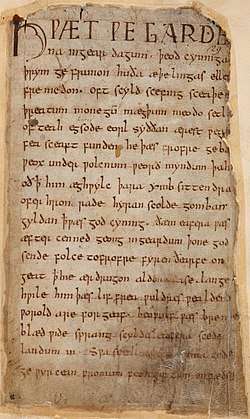
Each chapter of The Wordhord is arranged around a topic, such as how people understood time, what they ate, how they told stories, how they described the flora and fauna around them, among others. Each chapter ends with a small wordhord (a horde or collection of words) of vocabulary terms and their pronunciations. Videen peppers her meander through Old English with translated quotes from Beowulf, bibles and theological texts, chronicles, riddles, poems, and other scraps of written language. Reading these quotes can, at times, be like looking back at old social media posts because so much context has been lost because we just don’t understand the references anymore. For example, Videen frequently notes that some of the words she mentions are what linguists call hapax legomenon, words or phrases that only appear once in the entire known body of written text. There is rarely enough context to figure out what they really mean. Sadly, this means that some riddles—like the one about the wulfhēafod-trēow, the “wolf’s head tree”—are unsolvable now. On the other hand, when Videen talks about ūht-cearu (the anxiety some of us feel on waking up and immediately worrying about everything), I felt a sense of immediate recognition—followed by irritation that we lost a word that concisely expresses that emotion.
Two things, oddly enough, can help linguists and linguistics-curious people like me get a sense of Old English are kennings and the habit of scholars and writers to use contemporary customs, food, etc., when they talked about Christianity or the ancient world. Kennings are a kind of figure of speech used often in Old English. They are compound words that replace the ordinary name for something with something that I can only describe as a more poetic, impactful name. Instead of calling the sea the sea, you could call that big body of water a whale-road or refer to the human body as a bone-house. English really lost something when we dropped the kennings; they’re so wonderfully expressive and introduce all kinds of layers of meaning. Second, the way that writers and scholars of the Old English period re-dress the past in their own contemporary style has turned out to be a Rosetta Stone for understanding Old English and its world. We can use what we know from, say, the Christian Bible to translate between languages like Latin and Hebrew and the more obscure Old English terminology. I used to laugh at the way that manuscript illuminators would dress up ancient Romans or Biblical figures in medieval clothing (still do, to be honest) but it turns out that their translations are useful when we’re going the other direction. (I highly recommend this post from Weird Medieval Guys about this phenomenon.)
On top of all the word-y goodness in The Wordhord is Videen’s highly accessible explanations of language change and the medieval world. Readers who might be daunted by academic language shouldn’t worry at all. There’s also her clear joy at talking about Old English and sharing her wordhord with us, which makes for lively, entertaining reading. Anyone who’s interested in Old English should also follow Videen on Twitter, where she posts an Old English word of the day.
* And this only applies to languages with a writing system, of course.
** Unless you’re my nephew, who doesn’t capitalize or punctuate his texts. It’s like talking to e e cummings.
*** Blame the Normans and the Great English Vowel Shift, plus more than a thousand years of linguistic drift.
**** Fun fact: the Nowell Codex was almost lost in a fire in 1731. You can actually see charring on the edge of some pages.