
Trigger warnings for rape, forced sex work, physical abuse, and child sexual abuse.

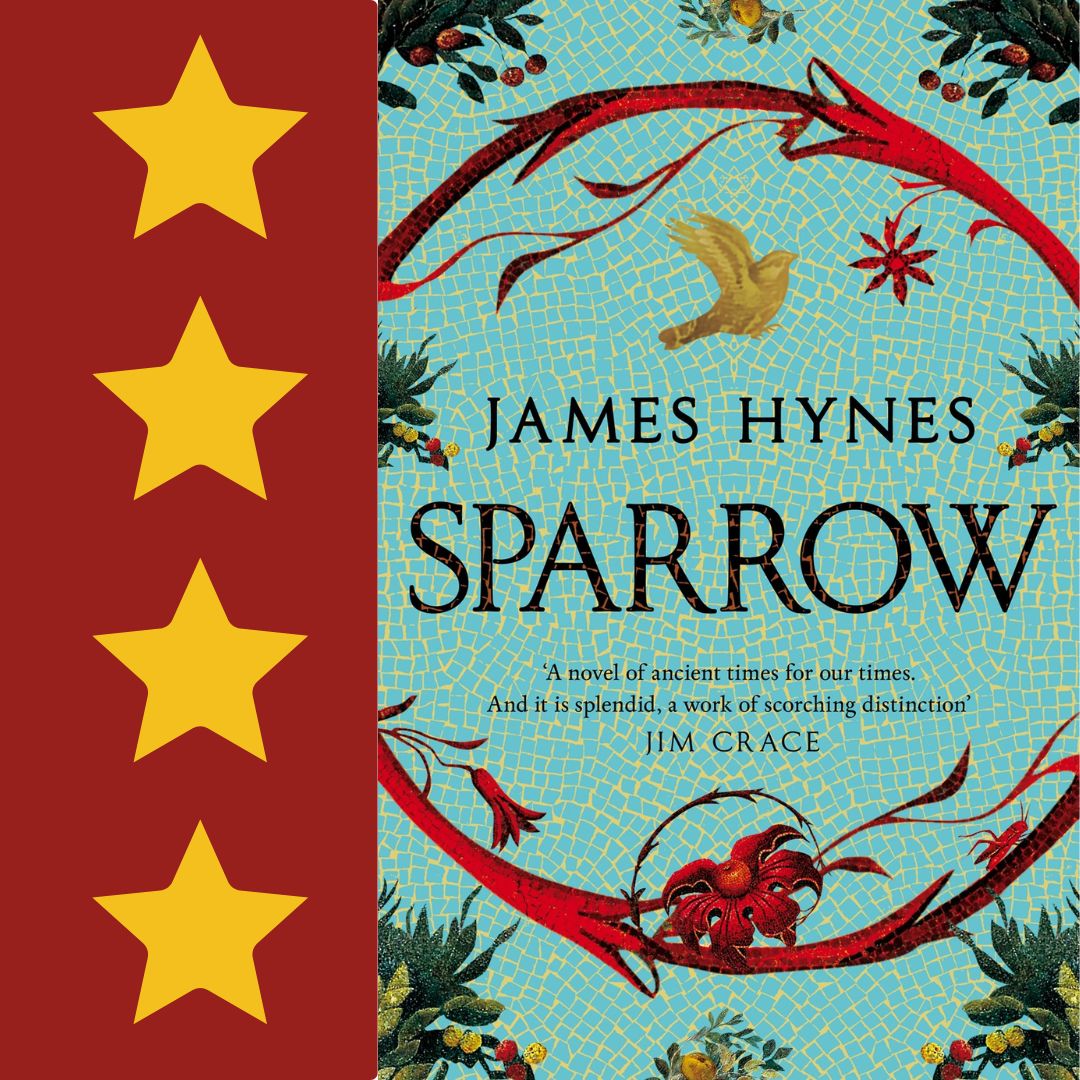
I was warned more than once by the narrator of James Hynes’ devastating novel, Sparrow, that this was not the kind of story where there would be satisfying revelations about lost characters or characters finding happy endings. Perhaps it’s because I’m so used to characters finding resolution—or at least the narrative tidiness of having loose ends tied up—but I felt emotionally pummelled by this novel. Sparrow hits hard and is not likely to leave my brain any time soon.
Our narrator—who has multiple names over the course of the novel—was doomed to a nasty, short, and brutish life. “Pusus” (which just means ‘boy’) is a slave in Carthago Nova, on the southeastern coast of what is now Spain, in a brothel. When we meet him, he’s very young and his first duties are really just to stay out of the way. He is so good at staying out of the way that even though he’s growing up in a brothel that Pusus maintains a shocking degree of naivety. The women who work there (mostly slaves themselves) shelter Pusus as much as possible, for as long as possible, from the reality of what goes on upstairs in the building where they all live. I understand the desire to protect Pusus but the terrible moment when Pusus is forced into sex work himself hits all the harder because I shared a bit of Pusus’s oblivious hope that he might get away with just being an extra pair of hands to clean, to run errands, and to fetch water.
We see everything that happens to Pusus through his child’s eyes. On the one hand, this is a good way to introduce readers to Pusus’s world. Being confined to the brothel for so long means that Pusus notices everything once he’s allowed to venture outside. He tells us about the smells of the fishermen’s stalls and takes in the details of the workers around him. His brain is a sponge for everything any adult says to him, even if he doesn’t understand what they mean. On the other hand, having an observant child narrator means that I frequently wanted to reach into the book to rescue the boy before anything worse happened to him.
Pusus is constantly reminded of the difference between his status as an orphaned slave in a brothel and the status of the free people around him. His only means of escape is entirely psychological, in the form of dissociating whenever someone hurts him or something particularly upsetting happens. He imagines himself flying away like the sparrows he occasionally sees, until he feels safe to return to the real world. Except, it’s not always clear at times—especially toward the end of the novel—that Pusus has returned to the real world. There are hints that Pusus might have found a way to always be a sparrow.
I suspect that I’ve made Sparrow sound utterly repellant or depressing. This is a bleak book but I found myself fascinated to watch the growth of a character raised in slavery, in a place where only bad things happen to people who have little to no hope of gaining their freedom. In spite of Pusus’s warnings that there wouldn’t be a happy ending, I couldn’t help but hope that he would find a way to gain some freedom. I cheered every time Pusus and the other sex workers found ways to claim a bit of liberty in their extremely circumscribed lives, even if it was just slowing down to get a bit of breathing room.
I strongly recommend this challenging book for the vibrance of its setting and for the rich psychological portraits of its characters.
I received a free copy of this book from the publisher via NetGalley, for review consideration.