
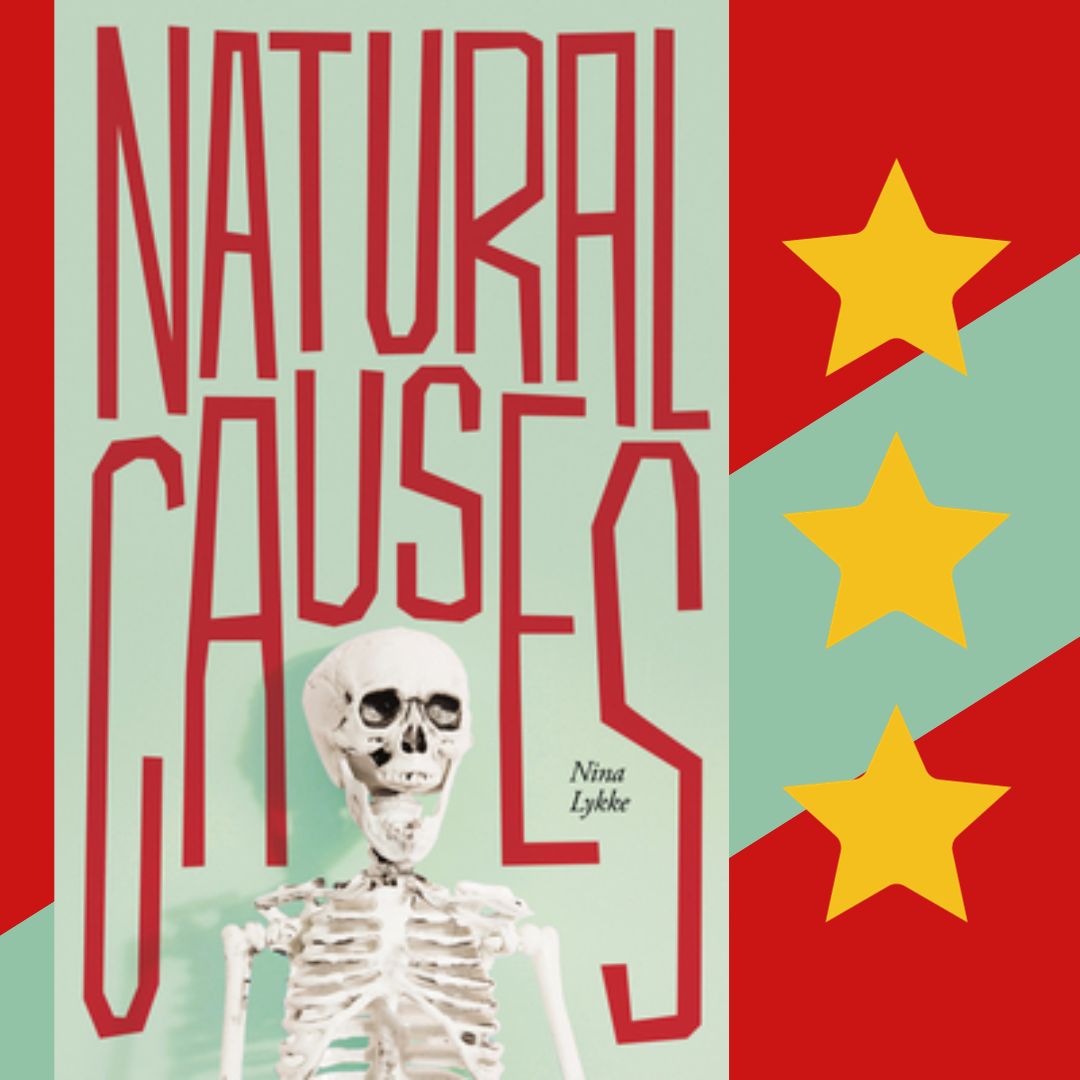

Elin, a Norwegian doctor whose life has just imploded, has only a plastic skeleton to talk to in Nina Lykke’s affecting novel, Natural Causes. This may sound strange at first but, when we learn that Elin has no one else to really confide in, a plastic skeleton makes sense—even if this skeleton is a bit moralistic. In flashbacks and conversations with Tore the skeleton, we see Elin rationalizing her way through a series of bad decisions. These conversations also reveal that there might be a reaffirming path out for Elin, after all.
Elin has spent years being a respectable doctor, mother, and wife. She’s always known what to do in order to keep up appearances in her liberal community. She never complains that her husband’s skiing hobby takes him away far too much. She never says what she really thinks when her patients give her lip service about drinking less, quitting smoking, or taking up exercise. All of the things that secretly annoy Elin wash over her until the day that she reconnects with an old flame, Bjørn. A small, rebellious part of Elin can’t resist talking to Bjørn, then meeting with Bjørn, then sleeping with Bjørn.
Of course, Elin’s deception can’t remain secret for long. Perhaps it’s that small, rebellious part of her, but Elin manages to send a sexy message to her husband instead of Bjørn that absolutely demolishes her marriage. We meet Elin in the aftermath of her divorce, as she secretly shelters in her clinic office and talks everything through with Tore the skeleton. Elin’s careful control is gone. Just as she tells everything to Tore, all the other things Elin could never bring herself to actually say out loud threaten to wreak even more havoc in the doctor’s respectable life.
In the quiet of her office, after all the patients are gone, Elin has nowhere to hide from the reality of her decisions. We might be tempted to judge or acquit Elin as she confesses and argues and deliberates. In spite of this temptation, Natural Causes is much more complicated than deciding if Elin is a good or bad person. This is what I liked most about this book (aside from the moments when Elin cuts through a patient’s lies to finally say what she’s been thinking) is how human it is. We are humans who make mistakes and—most challenging of all—we have to learn to live through those mistakes, no matter how catastrophic they are.
I received a free copy of this book from the publisher via Edelweiss, for review consideration.