
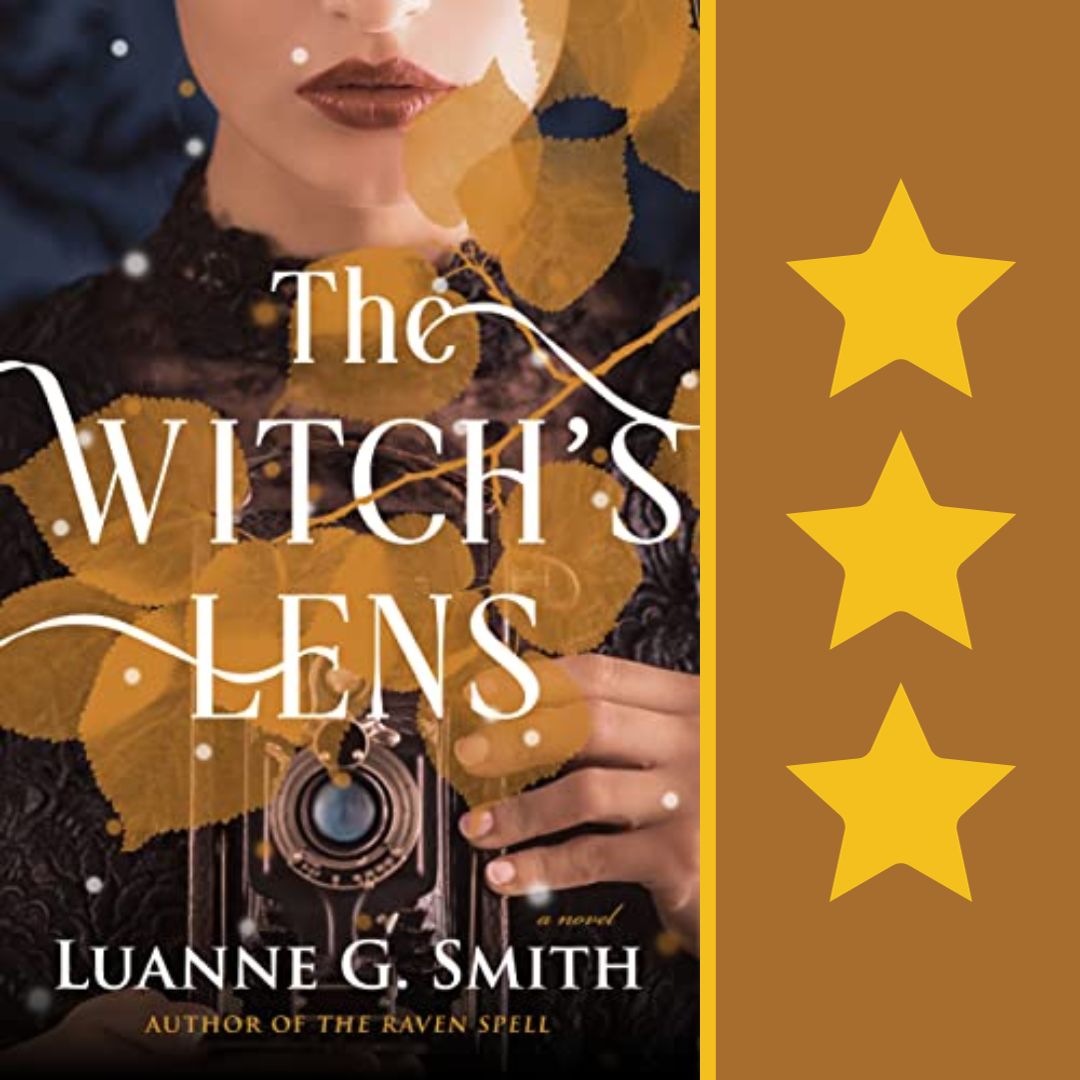

Petra Kurková’s life of quiet desperation is a little different from the usual kind, as Luanne G. Smith’s engrossing novel The Witch’s Lens opens. That her husband is off fighting for the Austro-Hungarian Empire during the disastrous First World War is ordinary enough. Her method of making money is rather different: she tells fortunes to make rent and keep herself fed. Even more unusually, she roams the streets of Prague late at night, photographing the city’s ghosts. Things get even weirder—and more dangerous—when Josef Svoboda badgers her into accepting a commission on the Empire’s behalf.
Smith’s version of our world is full of witches and magical monsters. Although witchcraft is entirely above ground, Petra has been hiding herself for years. There are hints that she’s not like other witches. (Thankfully, Smith doesn’t leave us hanging too much. All secrets are revealed by the end of the book.) But Josef’s insistence that she join a ragtag group of clearly passed-over magic makers for an important mission is too strong to ignore; there’s also the fact that Petra is evicted shortly after the man bludgeons his way into her life. With nothing else for her in Prague, Petra packs up her photography gear and her husband’s clothes and follows Josef into the mountains to hunt down terrifying creatures that don’t want to stay dead.
What really hooked me to this story was Smith’s use of Slavic folklore and witchcraft. World War I is transformed by an entire layer of magical warfare. While men fight in the trenches on the eastern and western fronts, witches and sorcerors do battle with each other with hexes and conjured creatures. Petra seems like small fry, at least until she starts to realize that the plan to get her out of the city and into the mountains was a ruse. There’s an even bigger plot—and a lot more skullduggery—than she knew.
There were some clumsy moments in The Witch’s Lens. A romantic subplot is telegraphed from a mile away. I didn’t mind so much, since I liked the characters involved. But there’s enough originality and folklore here to make up for a few clangers. I’m curious to see where this series goes.