


For roughly 100 years, landowners across Scotland forced their tenants off the land. Although economic and industrial factors can explain the Highland Clearances intellectually, from the perspective of people evicted from their homes and left with nowhere to go, this process was devastating. It’s little wonder that the protagonist of Carys Davies’s emotional novel, Clear, is hired to eject someone from the only home they’ve known by people too cowardly to do it themselves.
John—an idealistic preacher who wants to set up his own New Free Church community—is hired by a landowner to evict the last man on a remote Orcadian island so that the land can be turned over entirely to sheep. John isn’t told that the last clearance on Lowrie land turned violent. He isn’t told much about what’s supposed to happen to the evicted man. He’s barely told that this man, Ivar, doesn’t speak English and that the only person the Lowries had who could translate died. John is armed only with a small glossary of words that might work, some provisions, and vague directions about where to find Ivar. If you needed any other clues as to the kind of person John is, we get to see him promptly fall off a cliff and nearly drown on his first full day on Ivar’s island.
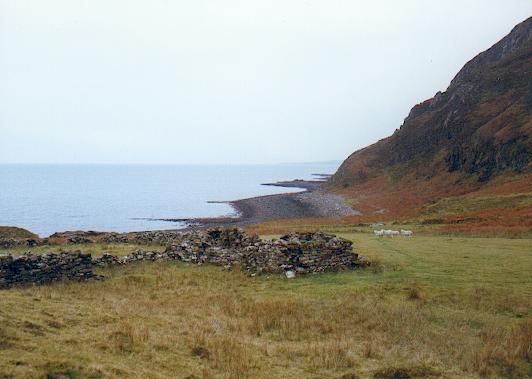
Ivar takes turns with John as narrator of Clear. Compared to John’s busy brain, Ivar is a placid man of the land. His days and seasons follow centuries-old patterns. He’s been alone for years, after the other inhabitants of the island moved on to the Scottish mainland and Canada. His only companions are a very old, blind cow, and an elderly pony. When Ivar finds, first, a photo of John’s wife and, then, John himself washed up on the shore of his island, it’s the first time he’s seen other people in more than 10 years. Once John recovers from his near-fatal accident and starts to learn Ivar’s language, the plot of Clear begins to move rapidly. John knows that he’s on a deadline to deliver the news about the Lowrie’s plans for Ivar and the island. His growing friendship with Ivar, however, makes him want to put things off as long as possible.
There are some things that happen near the end of Clear that I don’t totally buy, but I do appreciate the way Davies develops an almost irresistible sense of human connection between John and Ivar. The remoteness of Ivar’s island makes it easy for them to, for a time, feel like they’re the only people in the world. I don’t want to spoil the ending of Clear by talking about the book’s climax. That said, I would love to know what other readers make of the ending. In the meantime, I’d recommend this book to readers interested in the Highland Clearances, the Orkneys, and unusual love stories.