
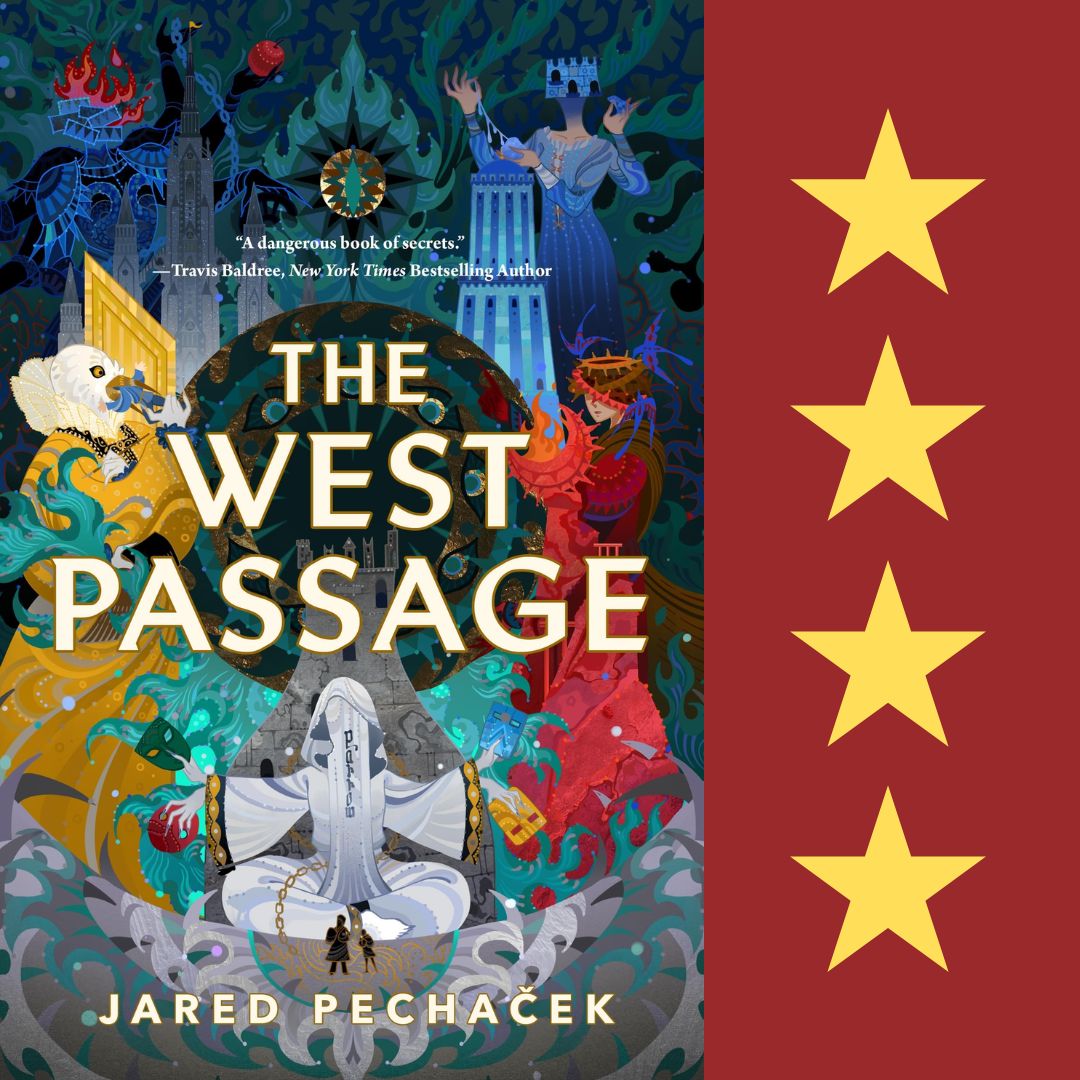

Jared Pechaček takes us on a strange ride through a depopulated crumbling palace on the brink of doom in The West Passage. This palace, with its monstrous warring Ladies, reminded me of a hive. Our protagonists, Pell and Kew, have to wend their way through a labyrinth to reach the answers and people they need. To make things even more complicated—and possibly allegorical—they have to contend with strange people with their own agendas who threaten to fatally slow our heroes’ efforts to keep the whole palace from toppling into nothing.
Kew and Pell were raised to take on the mantles—and names—of important people in the Gray Tower, one of five towers in the palace. They’ve spent years learning the lore and skills of their predecessors, Hawthorn the Guardian (Kew) and Mother Yarrow (Pell). What they don’t learn is why they have to keep up hundreds of rituals, why they must or mustn’t do something, or what they should do if the regular order of things completely breaks down. They’re so sheltered that, when they venture outside of Gray, they are utterly shocked to see the state of things. Nothing is maintained. People are few and far between. Dangers are allowed to roam the labyrinth between the towers.
The easy thing to do would be to turn around and hunker down in Gray while someone fixes things. Young Pell and Kew, however, are determined to carry out their duties. Kew heads off to the Black Tower, where they believe the most powerful of the Ladies is, to warn her that the Beast is rising. This Beast has returned before. Kew has been taught that, if not stopped, this Beast will devour everything. Meanwhile, the carefully regimented seasons have gone rogue and plunged Gray into an early, bitter winter. If Pell doesn’t get word to the Black Tower that the seasons are out of order, everyone in Gray will starve or freeze.
These simple missions lead Kew and Pell into some very bizarre places. Everyone they meet and everything they find just reinforces the atmosphere of mindless decay. Like Pell and Kew, they carry on with their assigned tasks as much as they can but it’s clear that everyone is struggling to carry on. There aren’t enough people to do all the work. Everywhere, things break and rot for lack of tending. Before long, Pell starts to wonder if she has been wrong about everything. Kew, meanwhile, has to decide if they’re fighting the right enemies.
The West Passage is a weird book. I’m not sure if I understood it entirely. The episodic pacing and stylized characters made me strongly suspect that there are allegorical shenanigans afoot. I’ve never been very good with allegory. That said, I was intrigued by the highly fantastical world Pechaček created. I wanted to know what was around each corner and who Kew and Pell would meet next. The conclusion of this book was a satisfying reward for sticking around.
I received a free copy of this book from the publisher via NetGalley, for review consideration.