
Trigger warnings for abuse and torture of children and prevalent racism.

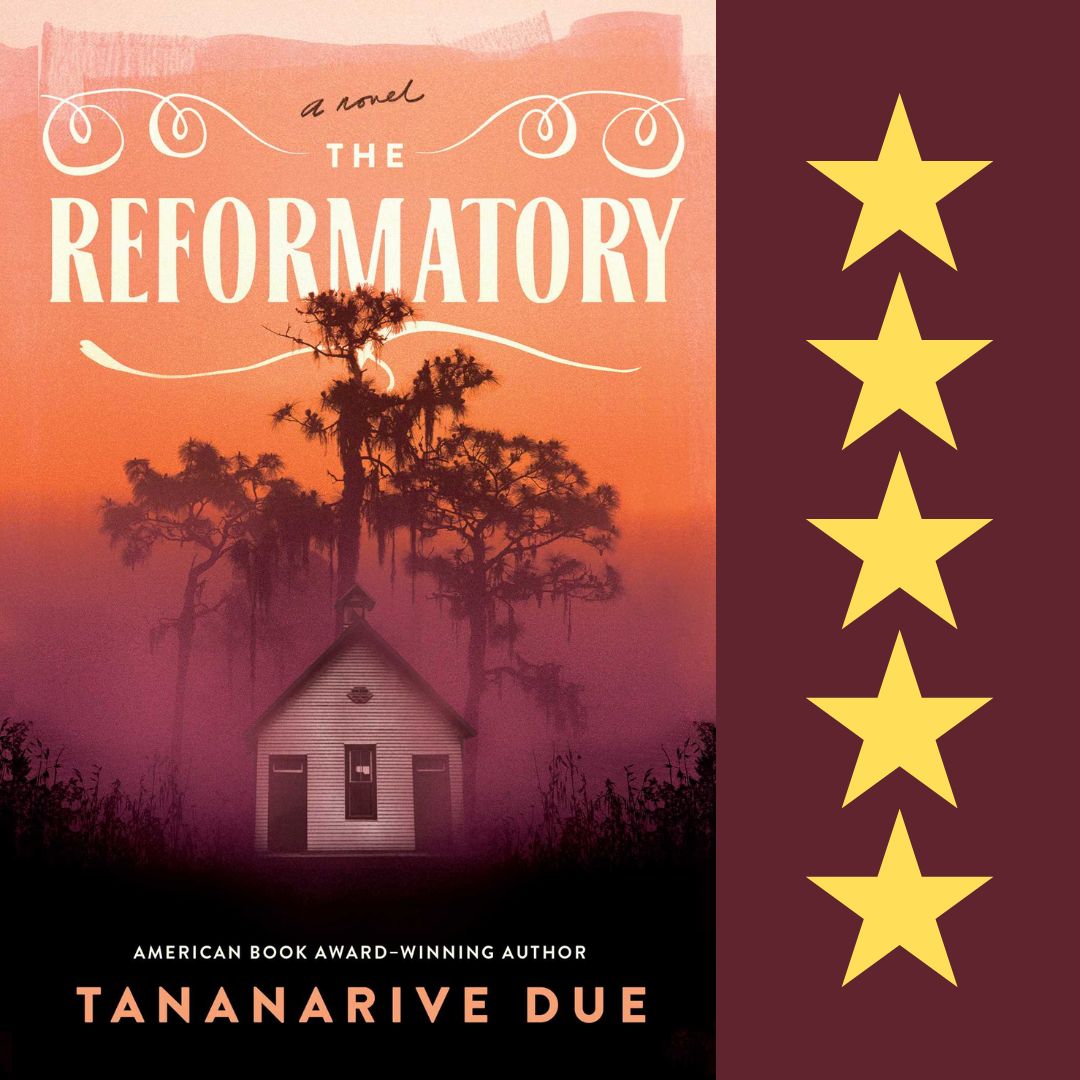
Tananarive Due’s novel, The Reformatory, is a devastating read. Every page made my anxiety spike and hackles rise and, yet, I know that what I felt reading Due’s novel was a mere shadow of what I might have been like to be Black and living in Florida in 1950. Although this book contains supernatural elements, real history has a starring role in the narrative. Not only does Due have an ancestor who was incarcerated and died at the Florida School for Boys, she also refers to the Rosewood Massacre, the lynching of Claude Neal, the prosecution of Ruby McCollum, and the murder of Harry T. Moore and his wife. (Moore and McCollum have brief cameos.) The supernatural elements provide no escape from the realization that the things that happen to the protagonists, Gloria and Robert Stephens, actually happened to real people1.
Gloria and Robert Stephens have gifts. Robert (Due names one of her protagonists for her ancestor) can see and talk to ghosts. Gloria has premonitions of the future. These gifts do little to affect the daily grind and dread of being poor teenagers in rural Florida. Their mother has recently passed away and their father, a union organizer, had to flee to Chicago when charges were manufactured against him. They are very much on their own. The inciting incident comes early. A local rich white boy harasses Gloria and shoves Robert when Robert comes to his sister’s aid. Robert then kicks the boy in the knee. This kick is Robert’s only “crime.” The boy’s father calls in a favor with the local judge and, within twenty-four hours, Robert is sentenced to six months in the Gracetown reformatory. Robert is only twelve years old.
The injustice of what happens to Robert burns through this book. From the moment Robert arrives at the reformatory, there is the threat of violence. Robert can see and feel the ghosts of boys who died in a 1920 fire, as well as boys who were murdered in various places on the grounds2. He knows from stories about the place that the place is hell on earth; he doesn’t need to see Boot Hill, the on-site cemetery, that he might not survive six months here. If it weren’t for the mentorship of two other inmates, Redbone and Blue, there’s a very good chance that Robert wouldn’t have survived the first chapters of this book.

While Robert learns to survive at the reformatory, Gloria pulls every string she can think of to have her brother released. She tries to talk to the boy who harassed her, his father, her white employer, and the white social worker who drove Robert to the reformatory before seeking out an NAACP lawyer who might be able to talk the judge into releasing her brother. Gloria isn’t safe from violence either. Because Robert’s incarceration might draw their father back from Chicago, the local Klan starts to threaten the Black portions of Gracetown. The siblings’ home is burned down and Gloria has to go into hiding.
The Reformatory is a harrowing read. I won’t lie. It’s hard to get through, but what fascinated me about the book is the sheer courage shown by Gloria and Robert. The pervasive racist violence is meant to beat down Black people, to keep them from standing up for themselves, and to keep them in “their place” (as decided by racists). The adults Gloria turns to are often reluctant to speak up on Robert’s behalf because they fear the repercussions; even sympathetic white people aren’t safe from the Klan. There are no sympathetic adults with any power at the reformatory for Robert to seek out. As a white woman, I grew up with a good expectation that the system—law enforcement, the courts, etc.—would give me a fair hearing. (If I was rich, I’d have a better than good expectation.) I don’t know what it’s like to live an entire life knowing that the entire world was set up to keep me poor, terrorized, and powerless. The profound bravery of the Stephens siblings is what kept me turning pages because it gave me hope that, this time, there might be justice.
- Two summers ago, I listened to Beneath a Ruthless Sun, by Gilbert King. King’s history of racism, violence, and injustice in Lake County, Florida is an excellent nonfiction companion to Due’s novel. Lake County is near where The Reformatory is set. ↩︎
- Anthropologist Dr. Erin Kimmerle found evidence of up to 55 graves on the site of the Florida School for Boys (open from 1900 to 2011!) and believes that many more children died there. A fire in 1914 killed an estimated six students and two staff. ↩︎