
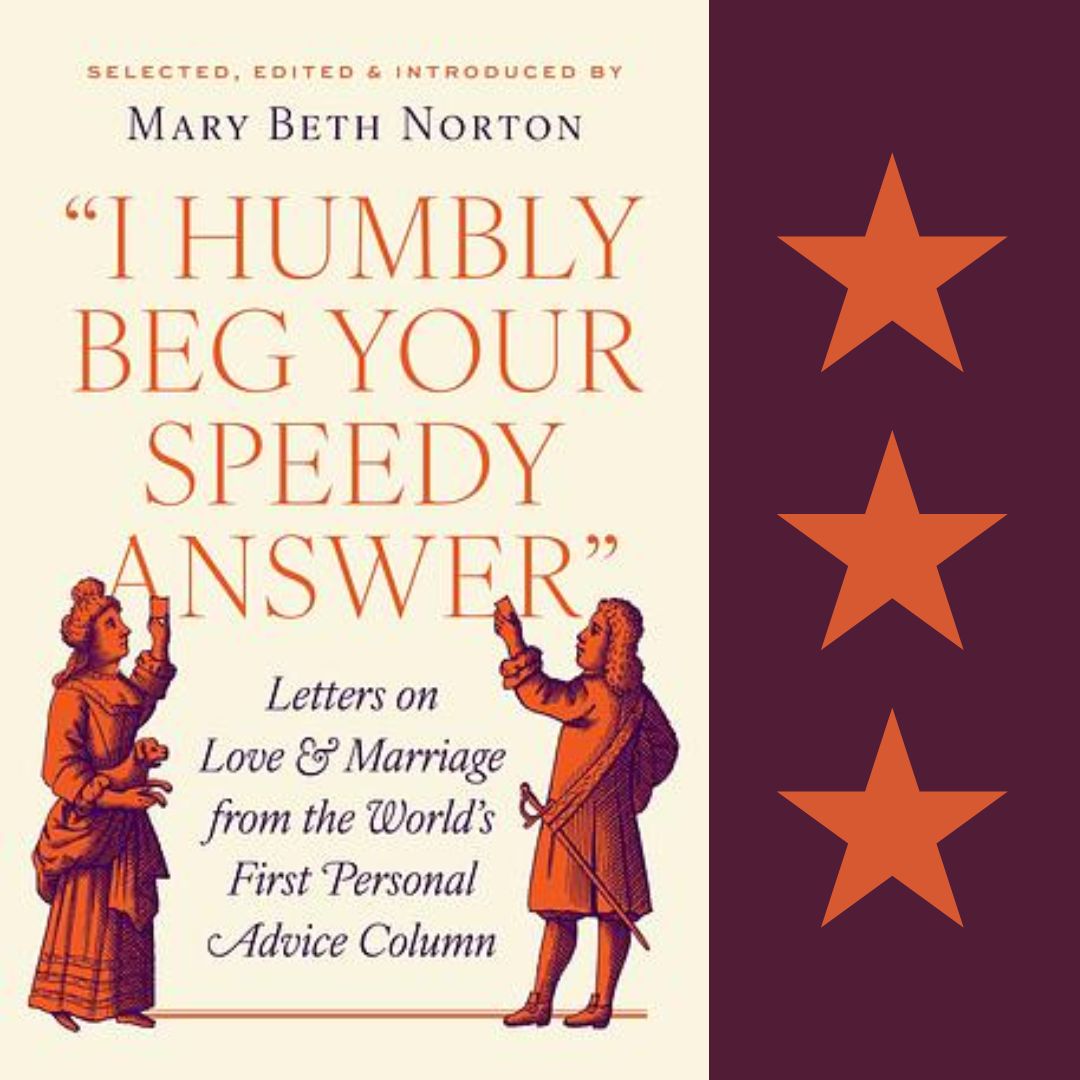

When I read about history, I’m generally reading about life in chaotic times: wars, plagues, political upheaval. I marvel at humanity’s ability to survive, innovate, and adapt things that I never could. Reading Mary Beth Norton’s new book, I Humbly Beg Your Speedy Answer: Letters on Love and Marriage from the World’s First Personal Advice Column, offers something entirely different. Rather than providing stories that show how much people have had to change, the letters from The Athenian Mercury (1690-1697) reveal just how much we have stayed the same.
The Athenian Mercury was just one of many London broadsheets before its editor-in-chief, John Dunton, and its staff hit on the idea of answering reader questions. They meant to be a definitive source of information about all kinds of questions about history, religion, science, etc. Almost immediately, however, their readers started sending in the kinds of questions we recognize from today’s advice columns. The excerpts Norton includes in I Humbly Beg Your Speed Answer cover how to let the object of your affection know your feelings, how to deal with rivals in love, settling conflict with spouses, and coping with disagreeable parents. It is truly remarkable how similar the questions are to what we see in Dear Abby or Dear Prudence’s columns, or even on Reddit’s Am I the Asshole forum.
Somethings were very different. Norton includes a whole section on questions from readers who wondered if they were actually married to their spouses. She shares that, until 1753, there was no legal definition of marriage in the United Kingdom. Couples often married in churches but, just as often, they would exchange promises with the blessings of their parents. Charmingly, some couples would split a coin in half and each partner would carry the two halves. There were a lot of promises with this system. What if the couple’s parents couldn’t be persuaded to give their blessing? What if the promises were exchanged without witnesses? What if one partner changed their mind? All of these and more occurred to the readers of The Athenian Mercury. One of my favorite questions comes from a poor woman who:

- Accidentally married a bigamist (he didn’t tell her he was already married with children, the cad)
- Lost the bigamist who was transported to the American colonies (he was initially sentenced to hang)
- Married another man and had children
- And then received a letter from the bigamist husband years later, letting her know that his first wife had died and that they were finally free to be together
Obviously quite a dilemma for the woman, but I can imagine other readers eagerly discussing the details over their cups of coffee and tea. If any romance novelists are looking for ideas, The Athenian Mercury is the motherlode.
Another thing that surprised me was how humane Dunton and his team could be. Norton includes some answers that modern readers would find misogynist or callous (more than once they suggest waiting until disapproving parents die before getting married). More often, I was surprised at how often the Athenians would take the side of their female writers who sent in their woes or offered strategies to get parents on board with a beloved suitor who might not have much of a portfolio.
I was charmed by this book, even the answers that raised my eyebrows. My friends can vouch for me, since I spent a week telling them about the woes of the seventeenth-century Brits who wrote in to The Athenian Mercury.