
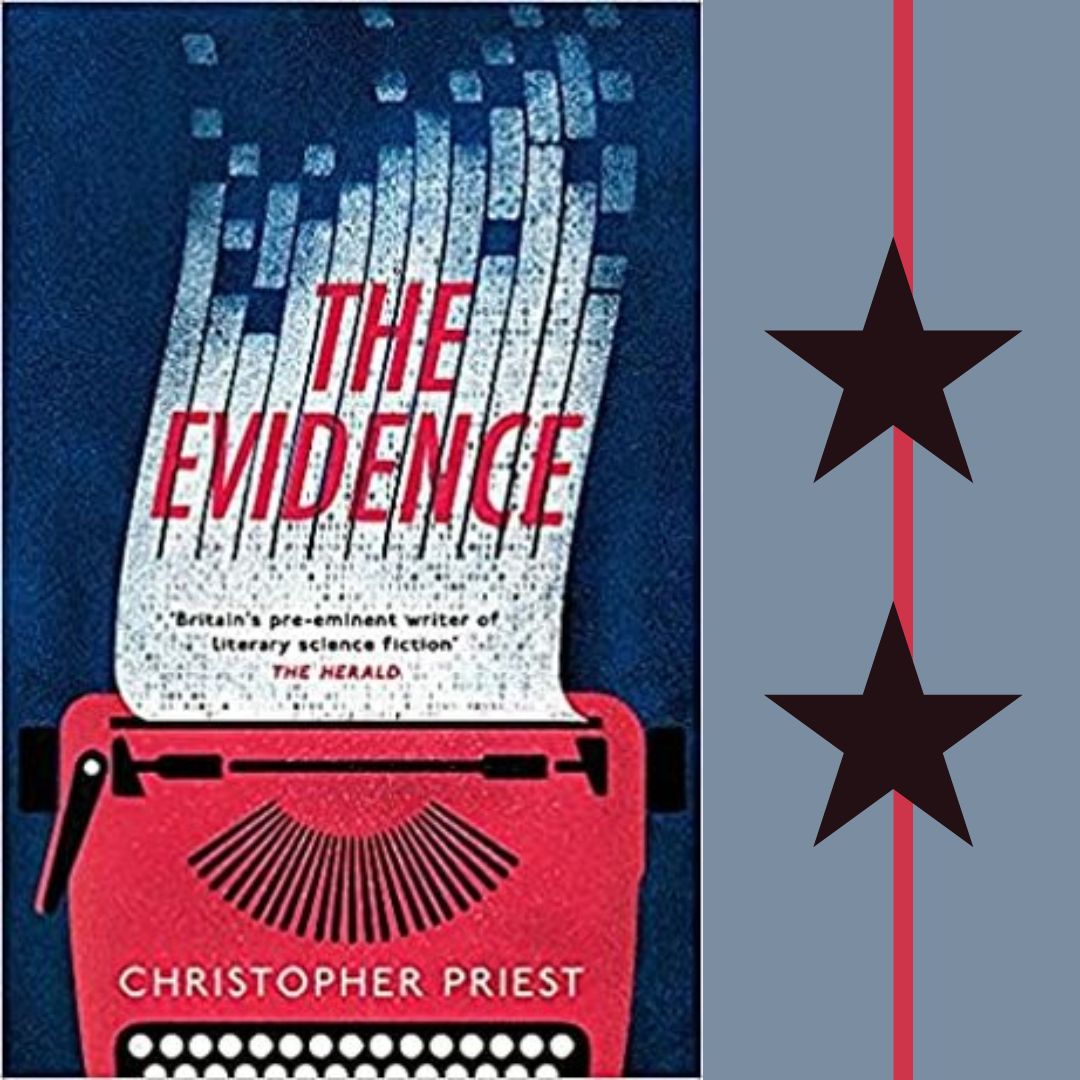

Christopher Priest returns to the Dream Archipelago in The Evidence. The Dream Archipelago is a massive sprawl of islands where the rules of time, physics, and reality are much less dependable than they are in our world. This novel takes our protagonist, mystery and thriller author Todd Fremde, goes on a maddening trip of a lifetime when he’s asked to deliver a speech about crime novels in societies where crime doesn’t exist on one of the most remote islands in the Archipelago. This journey will send him deep into unsolved crimes, revenge, and questions about the nature of crime and crime stories. Readers who like their fiction on the meta side may enjoy this deeply strange novel.
Before he travels to Dearth, Todd knows that he needs special gear to cope with the extreme cold on the island. What he doesn’t know—and what no one can satisfactorily explain to him—are the temporal and spatial anomalies people have to put up with. The rules to avoid the anomalies are infuriating and, again because no one bothers to explain why he has to follow these rules, Todd is pretty lax about following them. Dearth is so unpleasant to a man who lives on one of the tropical islands in the Archipelago that all Todd wants to do is give his speech and go home as soon as possible. He has no idea that he’s about to get tangled up in a mystery that’s been unsolved for more than a decade.
Things get weird even before Todd gets to his hotel. They get even weirder after he gives his speech, gets drunk in the hotel bar, and somehow makes friends with a high-ranking Dearth cop with an overpowered car at her disposal. This cop, Frejah Harsent, offers Todd a lift back to the airport. The price, Todd learns to his extreme annoyance, is that he has to listen to Frejah tell him about a case she never solved. Todd hates it when people tell him stories. He primarily reads non-fiction precisely because he doesn’t want even a hint of someone else’s tale ending up in his own work. Frejah’s story haunts him (just like he knew it would); he starts asking around and digging into the available records because he wants to know what really happened in what appears to be an impossible crime.
As Todd learns more about Frejah’s old case, he muses on mystery stories. Unlike a lot of other mystery writers (in his world and ours) who search for ways to raise the stakes or create ever more fiendish crimes for their fiction, Todd delves into the nature of crime itself. Todd has moved on from whodunits to whydunits. What pushes people to kill? What does it feel like to commit a major crime? His reflections about writing and crime slow down the overall pace of the book, unfortunately. I would’ve had more patience for this if the main plot of The Evidence weren’t so damned interesting. This is a tonally lop-sided book.