
Trigger warning for rape, mutilation, and slavery.

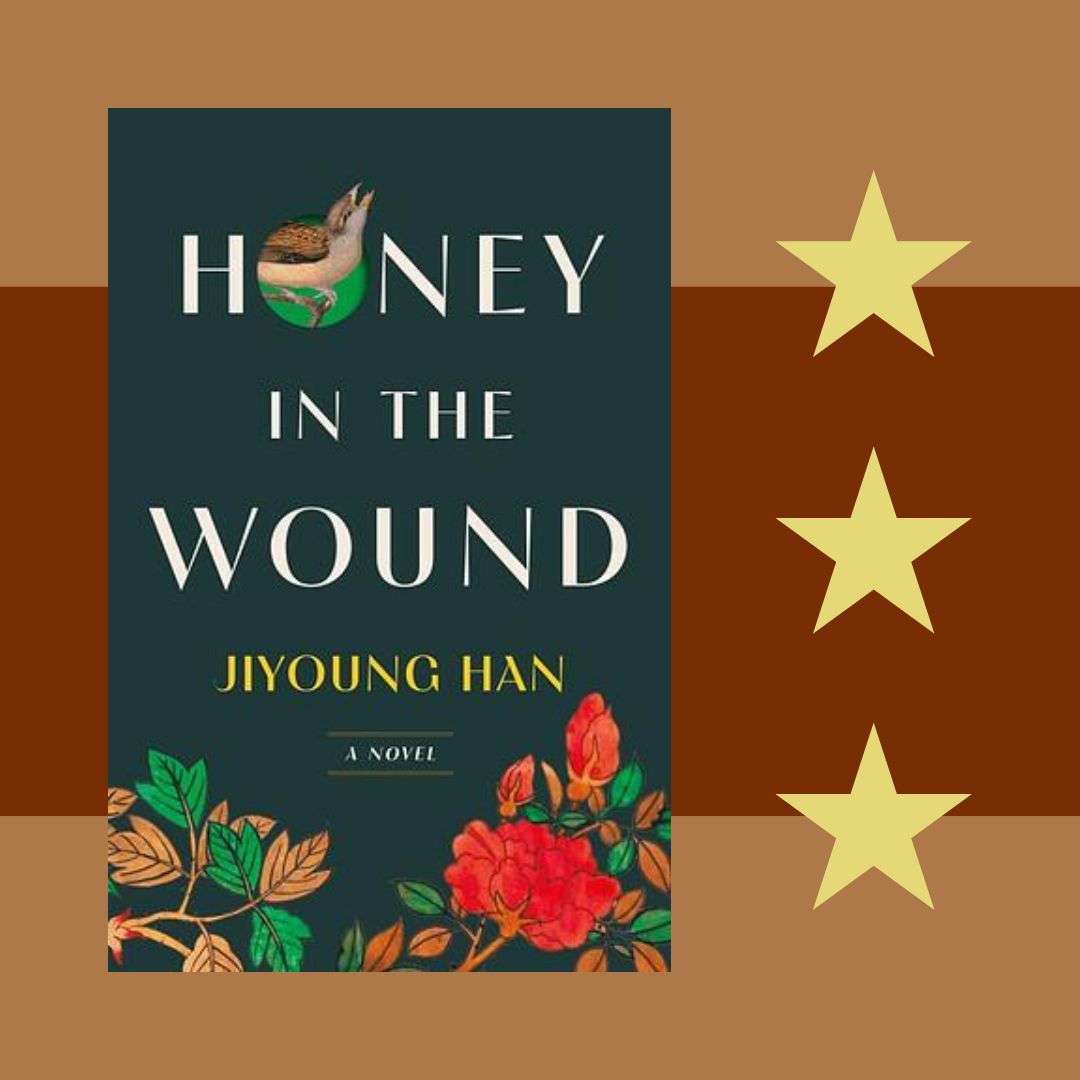
The little bit of magic held by Young-ja’s family was never enough to save them from the violence of the Japanese. Even though the family tried to hide away in Korea’s mountains, the Japanese always found them. Honey in the Wound, by Jiyoung Han, follows the family from 1902, a few years before the Japanese occupation of Korea, through World War II and into the 1990s. This book is very difficult to read because we can’t just remind ourselves that what happens in this book is just fiction; all of the evil things in this book are taken from history.
Most of Honey in the Wound centers on Young-ja, a young woman descended from a reclusive family whose members are touched by magic. Her grandmother could follow her children through the wilderness by putting her ear to the ground and listening for their footsteps. Her mother could get the truth out of others simply from the sound of her voice. Her aunt became a tiger. Young-ja’s gift is to put her emotions into any food or drink she prepares. Those she loves can feel the depth of her affection through the treats and meals she makes. She can also imbue food with her pain, despair, guilt, and shame.
Unfortunately, none of these gifts or the family’s habit of living away from other people can keep any of them safe. The Japanese found them in 1915, while hunting tigers. The Japanese find them again in the 1920s and 1930s, killing Young-ja’s family and causing her to be taken deep into occupied Manchuria. Through Young-ja, we learn about the monstrous, unforgiveable, and unforgettable crimes of the Imperial Japanese Army: Unit 731, slave labor, and the appalling treatment of the “comfort women.”1 Even once the Japanese are defeated in 1945, Young-ja still carries what was done to her physically and emotionally. The last third of the book is a small relief after watching Young-ja’s journey as activists raise awareness of Japanese war crimes against women with the Wednesday Demonstrations.
Honey in the Wound is one of the most emotionally grueling books I’ve ever read. I have some questions about Han’s choices about the book’s structure, but I appreciate this fictional monument to the suffering of Korean women and the Korean people at the hands of Imperial Japan.
I received a free copy of this book from the publisher via NetGalley, for review consideration.
- This is the term used by the Imperial Japanese Army for the women they kidnapped, raped, mutilated, and murdered. The euphemism makes my skin crawl, which is why I always put it in quotation marks. ↩︎