
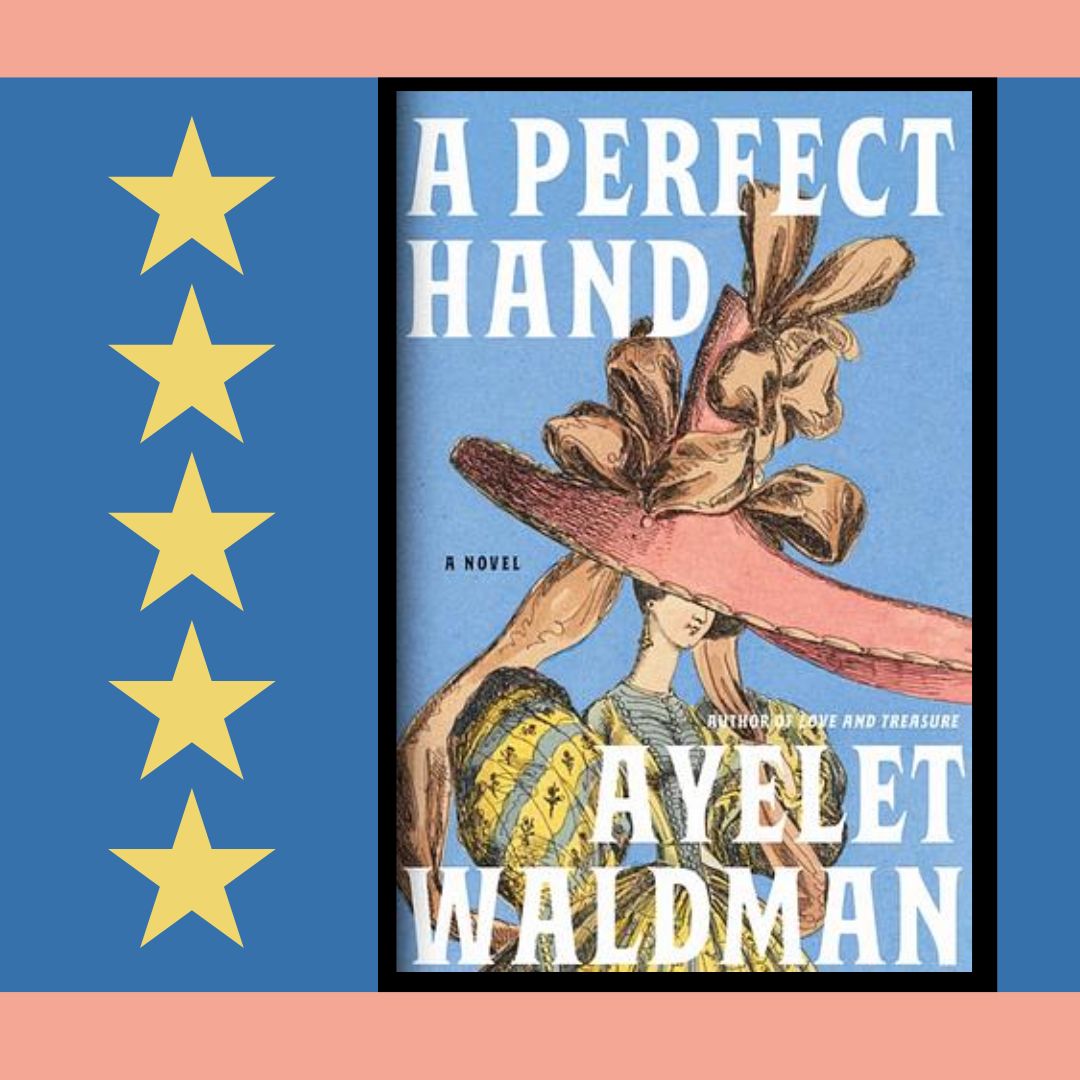

The further I got into Ayelet Waldman’s incredible new novel, A Perfect Hand, the more I thought of Oscar Wilde’s line from Lady Windemere’s Fan: “We are all in the gutter, but some of us are looking at the stars.” This is not to say that the characters here are in the gutter, as such, but that a few of them learn how to look for something more ambitious than they were raised to expect for their stations in life. I’m going to be pushing this book on a lot of readers once it comes out.
Alice Lockey is a farmer’s daughter who went into service for the Alderwick family, the local aristocracy. Through hard work and a certain ruthlessness, Alice secured a position as lady’s maid to the shallow but generous Lady Jemima Alderwick. For a while, this is enough. The pay is good, even though Lady Jemima runs her ragged with requests with no regard for the fact Alice needs to eat and sleep sometime. When Lord Wynstowe (a hypochondriac who has his way through life smoothed by servants and money) visits, Alice meets valet Charlie Wells. The two instantly spark, though they try to hide it from everyone.
Servants who fall in love often find themselves dismissed without a reference. The only way for them to be together, Charlie argues, is for them to arrange for Jemima and Wynstowe to get married. This is no easy task as Jemima loathes Wynstowe; he bores her terribly. Meanwhile, Wynstowe is oblivious to just about everything except potential symptoms of illness or injury and phrenology. It takes every bit of Alice and Charlie’s skill at nudging their employers—and figuring out how to let Jemima know about her preferred lover’s bad habits—to get the aristocrats to even pay attention to each other.

A Perfect Hand might’ve been a delightful historical romance (with some equally entertaining Dickensian-style snark from the book’s narrator) if it weren’t for one thing: Alice reads. Lady Jemima’s aunt has a habit of giving her nieces books about philosophy, politics, and history, with a healthy dose of literature in the form of novels like Uncle Tom’s Cabin. The ladies aren’t much interested in John Stuart Mill, but Alice very much is. The more she reads, the more she starts to think about the limits of her world. Why shouldn’t she look for more than a position as a lady’s maid? Is she really satisfied with Charlie’s plan of a life in service and a retirement in a shop? Why should she be content with only a half day off every other week, contingent on the whims of the people she works for? And, while we’re at it, why shouldn’t she be able to vote like men can? Alice’s reading sends her on a new trajectory through life that I found inspiring and deeply satisfying. I loved that the books she read and the thoughts they engendered introduced such an original twist to A Perfect Hand.
After reading more conventional historical romances, it was refreshing to see a story about the people who make the lives of aristocrats happen—the people who wash the muddy petticoats after their mistresses wander around on the moors and fetch the drink and food late at night. More than once, I was reminded of Jo Baker’s Longbourn, which has a similar perspective but not the hilarious commentary on the foibles of the rich. Readers who want a look downstairs or who want a story in which a character learns that there is more to want than a good enough job will enjoy the hell out of A Perfect Hand.
I received a free copy of this book from the publisher via NetGalley, for review consideration.
It looks very tempting!