
Trigger warning for rape, racism.

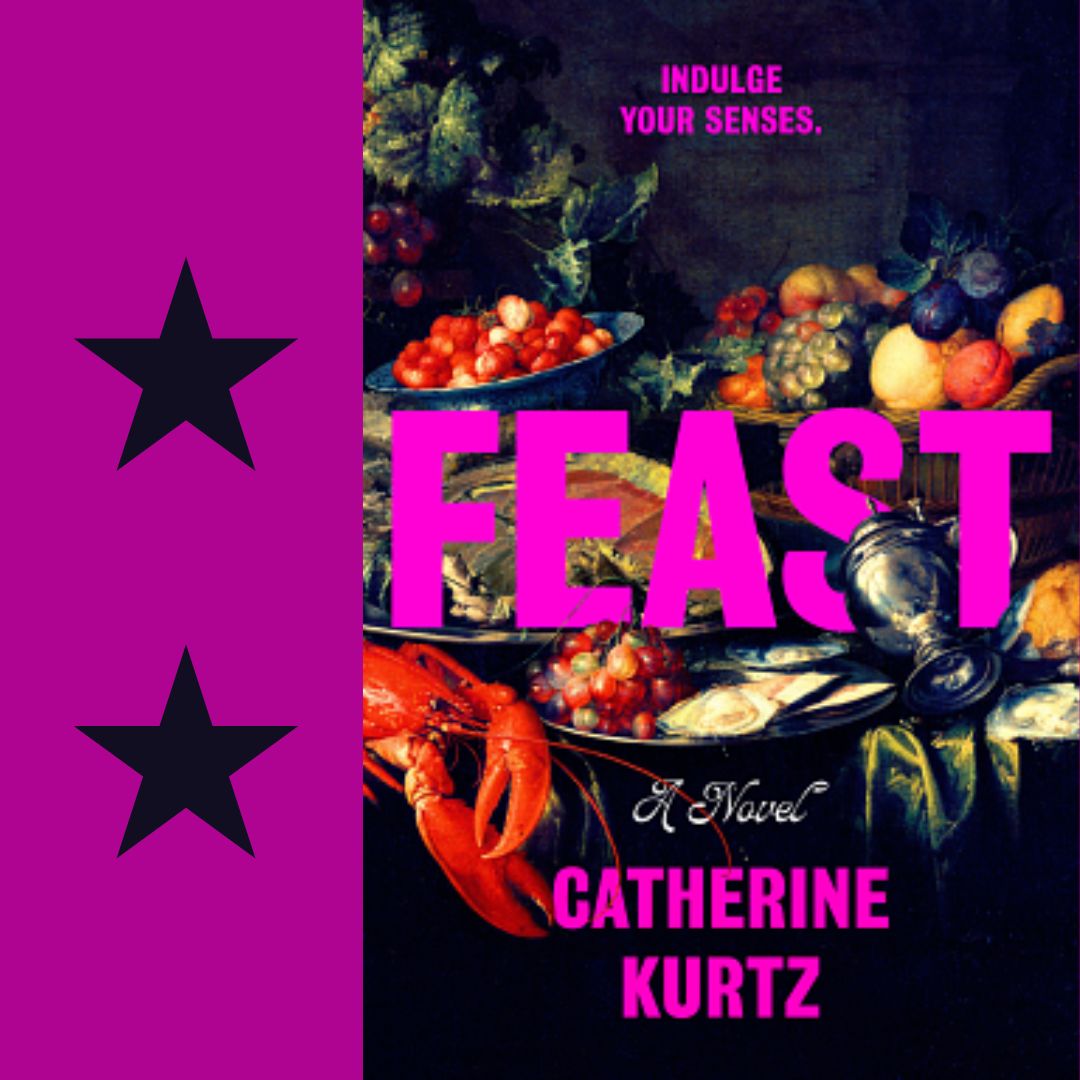
At the outset of Catherine Kurtz’s troubling novel, Feast, Minha has just lost the only place she felt at home. Her race has always marked Minha as an outsider in 1880’s London. (Her father was an Indian sailor who went to sea one day and never came back.) Her unusually adept senses of smell and taste make her even more of a misfit. She’s been treated badly by just about everyone in her life and is, consequently, one of those people who gravitates towards anyone who shows her a bit of kindness without regard for the red flags. Reading this book was a frustrating experience because I constantly wanted to shout down into the book for Minha to develop a sense of self-preservation.
After her beloved grandfather dies, Minha is pushed out of her home in rural England. For lack of anything better, she decides to stowaway on a ship for France, where her grandfather grew up. It’s a wonder she even survives the trip because she had very little money, inadequate clothing, and no one to meet her on the other side of the channel. She manages to stumble into a village with the last of her strength and is rescued by one of the few people to be kind to her in this entire novel. The baker, Camille, feeds Minha before suggesting that the young refugee head up to the castle for a job. Minha manages to wrangle a job through a curious bit of paradoxical luck. Someone is trying to poison the Duke (bad luck), but Minha is able to smell the rat poison in the duck (good luck) before it’s served. The Duke hires her on the spot as a poison taster.
The other servants loathe Minha. There are a lot of comments about her kind, direct shunning, and even acts of sabotage against her. To make things even more miserable (as if Minha needed an additional burden), the Duke’s chef prepares dishes that are so rich with spices, fat, and sugar that I was worried about my blood pressure and pancreas just reading Feast. Minha has no friends at the castle, only enemies. The Duke is no friend, either. Although he hired her, he treats her like a novelty by occasionally summoning her during banquets so that she can identify all the ingredients in a dish from a single taste.
When Minha discovers an emaciated man freezing in the stables, she thinks she might have found someone to share her loneliness with. Sadly, Alexandre turns out to be one of the worst people to happen to Minha in this entire book. The second half of this book races along as one thing after another goes wrong for Minha. All she can do is run, once again, until a chance meeting years later offers a chance for Minha to gain a measure of justice.
I was initially attracted to this book because of Minha’s supertaster ability, hoping to find another book like Crystal King’s Feast of Sorrow or The Chef’s Secret–books that are as much about the history of food as they are about the characters. This book doesn’t teach us anything about French fin de siècle cuisine. (There are a few details about terroir, but they are very brief and only serve to highlight the incredible specificity of Minha’s palate.) As for characterization, the only person we get to know in this book is Minha. All but two of the other characters is a villain or a non-entity. This was a disappointing book.
I received a free copy of this book from the publisher via NetGalley, for review consideration.