
Trigger warning for interpersonal violence, mutilation, rape, incest, and references to pedophilia.

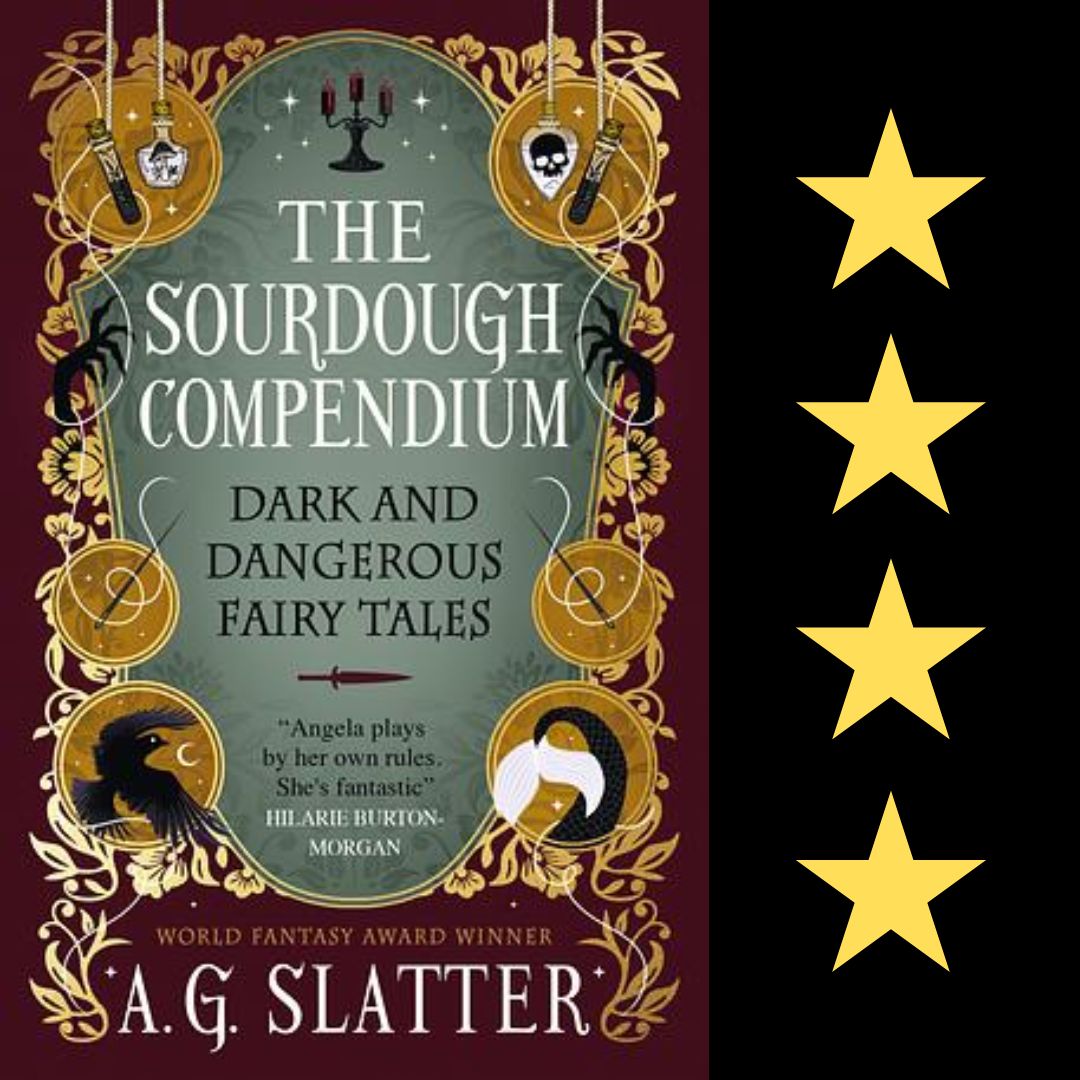
I’ve been a fan of A.G. Slatter’s Sourdough universe since 2021, when I read All the Murmuring Bones. Slatter’s Sourdough world is a dark fairy tale of real risk and sorrow, injustice, and revenge. It’s catnip to me and I’ve read almost all1 of the novels set in that world as soon as they’ve been published. I was thrilled to learn that all of the Sourdough stories that preceded All the Murmuring Bones were going to be published in one volume, The Sourdough Compendium. And when I saw an advanced reader copy appear on NetGalley, I leapt at the chance to read it. These stories are absolutely incredible.
The Sourdough Compendium contains The Bitterwood Bible and Other Recountings, Sourdough and Other Stories, and The Tallow-Wife and Other Tales. Together, these stories create the foundation of Slatter’s Sourdough universe. Readers of the later novels will be delighted to learn more about the Little Sisters of St. Florian and how their order was destroyed, the rise of the god-hounds and their crusade against witches, and how the leech lords of Caulder met their end. But there is so much more in these stories to enjoy: troll-wives, pirates, characters desperate for immortality, and a whole lot of betrayal and revenge.
There’s so much contained in The Sourdough Compendium that it’s impossible to include everything in a review. That said, I did see some larger narratives developing across the three sets of stories. (Slatter enjoys having characters from previous stories pop up either as cameos or letting them tell their side of the story.) As far as I can tell, the stories arranged roughly chronologically. The stories from The Bitterwood Bible and Other Recountings seem to be set some centuries before those in Sourdough and Other Stories. The stories in The Tallow-Wife and Other Tales feel closer in time to the novels that were published after all of the short stories.
Several of the Bitterwood Bible stories follow the story of the Plague Maiden, the exiled daughter of the Erl-king, as well as the last years of the Little Sisters of St. Florian. All of the stories involve characters fighting back against men who seek what they’re not entitled to: sex, wealth, forbidden knowledge, immortality. These are brutal stories and the moral arc of this universe does not seem to bend towards justice, though it can be snapped if those who are wronged find the ruthlessness to enact revenge on those who have hurt them.
The stories in the second collection, Sourdough and Other Stories, are almost as full of revenge. Many of them involve characters who have their rightful place usurped. Sometimes characters are swapped for changelings. Other times, our narrators’ lives are taken over by relatives who cannot overcome profound depths of envy and want. It’s up to the protagonists to take back what has been stolen, or to walk away and create a new life, far away from those who disappointed them by listening to the imposters.
The stories in The Tallow-Wife collection work together to create what felt like a single story, told from different view points. In these stories, a woman had her family and almost her life stolen by a bitter, broken sister and her efforts to try and reclaim what was taken from her. This quest is much more complicated than the similar ones we saw in the Sourdough and Other Stories collection, as Slatter throws in a sub-plot involving cursed troll treasure, as well as showing us what happened to our primary protagonist’s lost children in the years following the destruction of her life. While time heals some wounds in Slatter’s Sourdough universe, it does an awful lot to inflict additional injuries that make it impossible for characters to go back to the way things were.
I am torn about whether or not to recommend reading this book quickly or slowly. My argument for reading it quickly is based on how interconnected the stories are. It’s too easy to forget names and relationships if one takes a break between the stories–unless one has the foresight to take notes. My case for reading it slowly has two points. First, these stories involve serious violence that are hard to cope with without breaks. Second, a lot of the narrators and protagonists start to feel very similar if you plow through the stories as quickly as I did. It gets hard to differentiate these characters since they so many of them have the same or nearly the same plot arcs. Instead of making a recommendation one way or the other, fellow readers, I’ll leave it up to you to make the choice of reading fast or slow.
I received a free copy of this book from the publisher via NetGalley, for review consideration.
- There’s one book in my to-be-read heap that I haven’t gotten to yet. ↩︎