
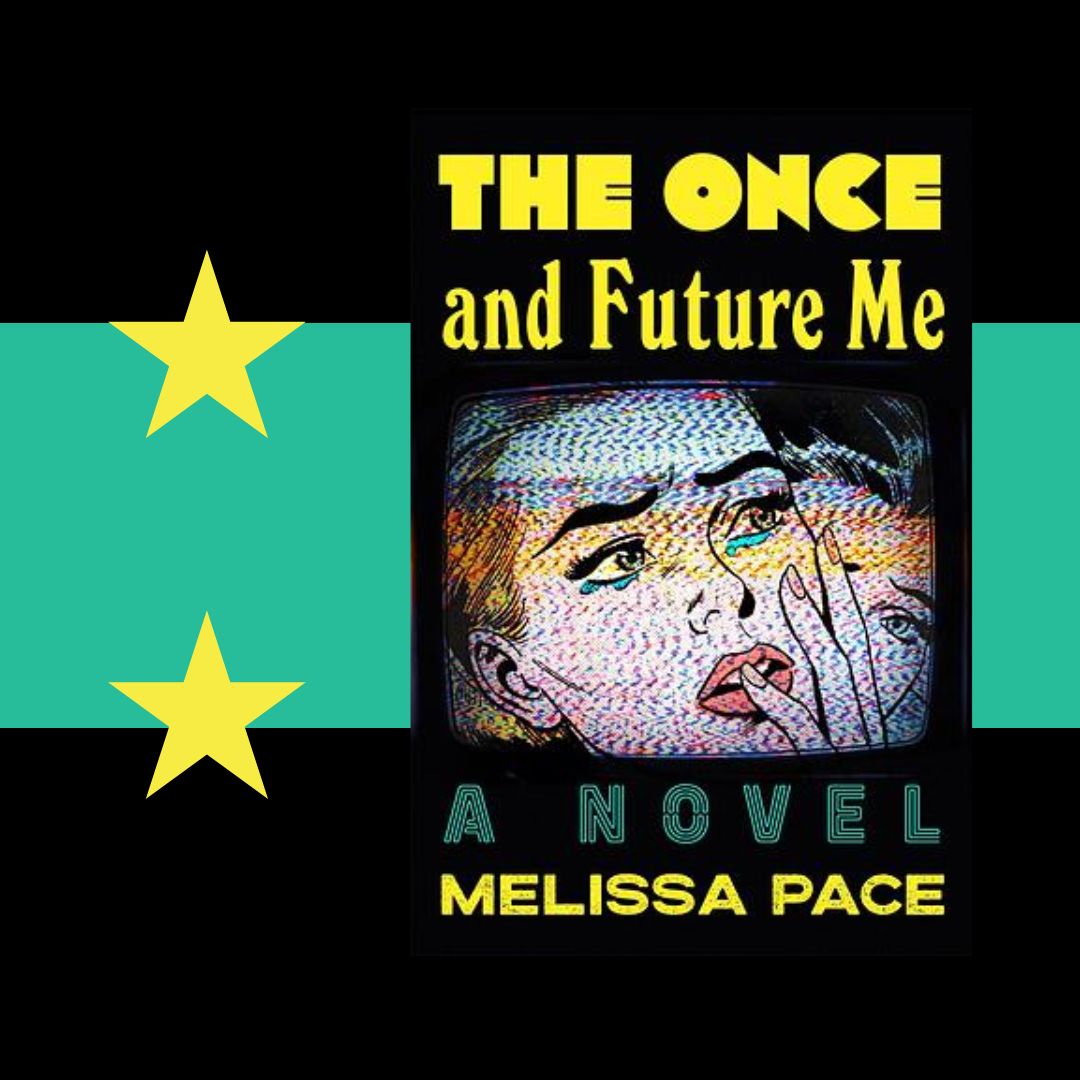

Reality is more fragile than we might realize and, when one is out of step with society, it’s shockingly easy to be entirely dismissed as insane. The reality of the protagonist of The Once and Future Me, by Melissa Pace, is very much out of joint with the reality everyone else shares. You see, Bix believes that she’s from the future. She’s returned to 1954 on a mission to stop an apocalyptic pandemic in the 2020s. Her reality is so incredible there’s little wonder that not only does no one believe her, everyone thinks she is seriously mentally ill.
The first half of The Once and Future Me walks the line between the possibility that what Bix believes is true and the possibility that she has schizophrenia or something equally devastating. She has no proof to offer anyone other than her conviction that she’s a time traveler on a mission. Bix doesn’t even have any proof that she’s who she says she is because a woman on the bus transporting Bix and other women to a mental asylum stole Bix’s purse and left Bix with her own ID. According to that ID, Bix is Dorothy Frasier, a deeply disturbed and violent woman with religious delusions. Psychiatry in the early 1950s was brutal. Medications are little more than sedatives and electroconvulsive therapy and insulin therapy are popular. Worst of all, many doctors swear by the benefits of lobotomies. The only way to avoid the worst “treatments” is to comply with everything, but Bix is not the kind of person to go along to get along.
The second half of the novel is where most of the action is. Sadly, I was disappointed by it. The plot rushes along to quickly and questions are answered far too readily, especially after the tension and doubt of the first half of The Once and Future Me. There was also a chance for Pace to throw in a heartbreaking twist that she completely bypassed. Even more irritating (for me) was the sudden appearance of secondary characters popping up to fix things for Bix; they deflated a lot of the interesting tension at the end of the book. The first and second halves are so different from each other that they almost don’t even feel like they belong to the same book, excepting the characters and plot throughlines. For example, most characters refuse to tell Bix anything during the first half of the novel. They only reinforce her sense of dissonance with reality. In the second half, characters spend whole paragraphs telling Bix about what’s going on and filling in the gaps in her memory. Another example: the conflict in the first half of the book is between Bix and her fractured mind and the terrors of mid-twentieth psychiatry, while the conflict in the second half is much more physical as Bix lashes back at the people trying to stop her on her mission.
I try not to fault writers for not writing the story I wanted. Authors have much more imagination and creativity than I do, and I rely on them to surprise and delight me with tales I could never have cooked up myself. But when I read a book and spot so many missed opportunities for incredible storytelling, I’m left with the sour taste of frustration and dissatisfaction.