
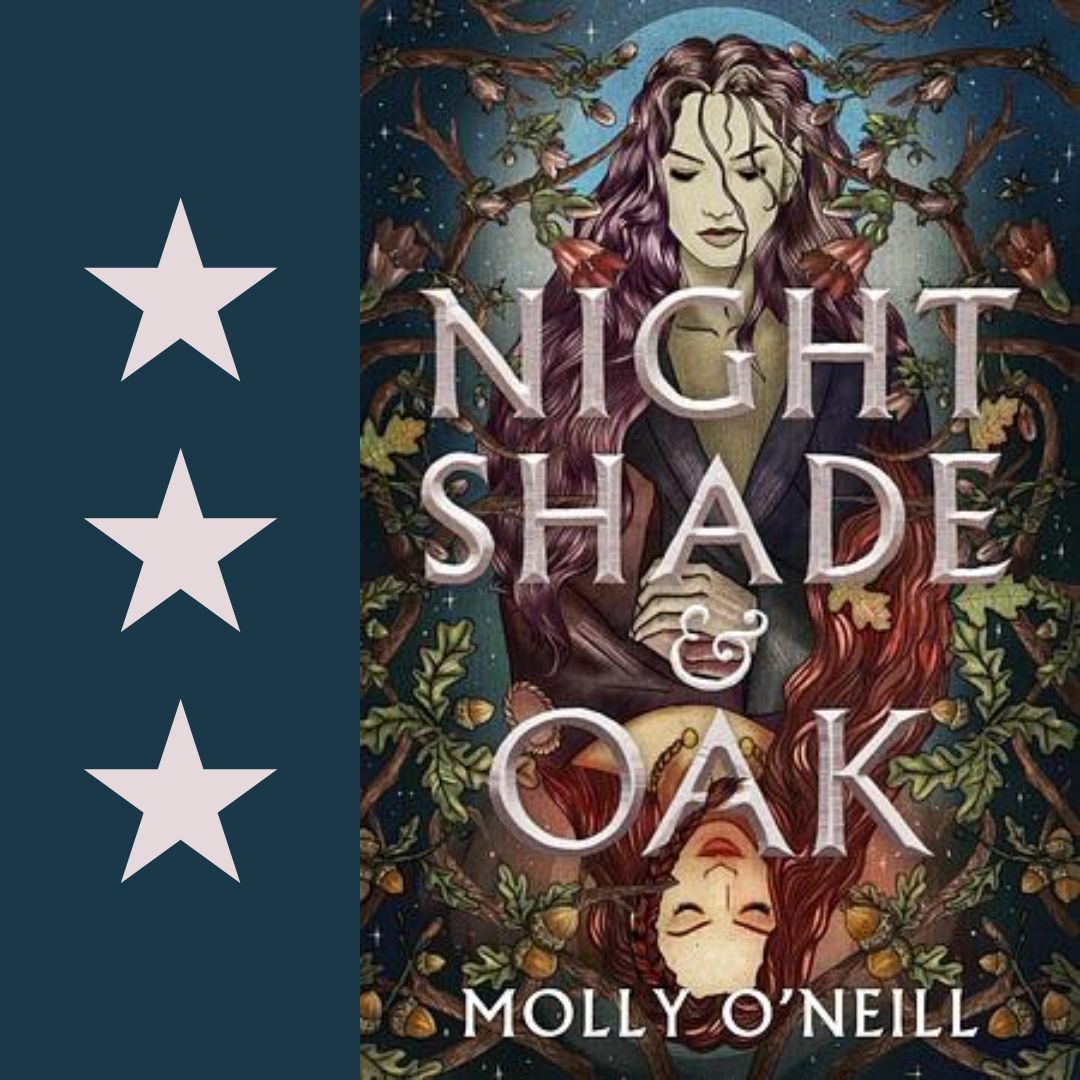

Mallt Y Nos is a very busy deity in the days after the defeat of Boudica and her rebellion against the Romans. As Molly O’Neill’s Nightshade and Oak opens, Mallt darts around a battlefield, releasing souls to continue on their way to Annwn. Then, just as quickly, Mallt finds herself powerless and alone with the queen’s very belligerent daughter, Bellis. This book never slows down as Mallt and Bellis race around Celtic and Welsh Britain to try and find the magic they need to put things right again.
Mallt is, by far, the most interesting character in Nightshade and Oak. Bellis is consistently angry and exasperated. Small wonder, given that her world is gone, killed on a battlefield. If she’s captured, Bellis will be taken to Rome in chains, like other formerly independent leaders of territories the Empire conquered. Mallt is much more complicated. She’s a blend of ancient knowledge and puzzling naivety. Until she accidentally gets in the way of a powerful spell, Mallt was a goddess. The spell strips Mallt of everything, leaving her utterly human. She’s never been cold, hungry, or tired in her long existence. Bellis is a warrior at the peak of her abilities and has no patience for the struggling new mortal.
Mallt firmly believes that their only hope is Arawn, the lord of Annwn. Only his magic can restore Mallt’s divinity and help restore Bellis’s dying sister. The road to Annwn is long and full of dangers in the form of Mallt’s weakness, revenants, and Romans. Things aren’t any easier when the duo reach Annwn, only to learn that something is attacking the very roots of Welsh and Celtic magic. The number of tasks Mallt and Bellis have to complete in Nightshade and Oak feels like they’ve been pulled straight out of folklore to test their worthiness. There are more than the traditional three, however.
Reading Nightshade and Oak was a curious experience for me. On the one hand, the plot races along so quickly that there are very few opportunities for character development or scene-setting. Given that a good part of this book takes place in Annwn, I would’ve loved more detailed descriptions of what Mallt and Bellis experience. Instead, the book is a series of battles or chases or impossible tasks, without much to further flesh things out. On the other, the prose isn’t as stripped down as I would expect from traditional fairy tales and folklore, which only discuss the events of the story and leave all of the details kind vague so that the reader can color them in with their imagination. It’s a discomforting experience to make sense of a book that has both too few and too many words.
Readers looking for a fast read may enjoy this. Readers who really want to soak in Celtic and Welsh history and lore should look elsewhere.