
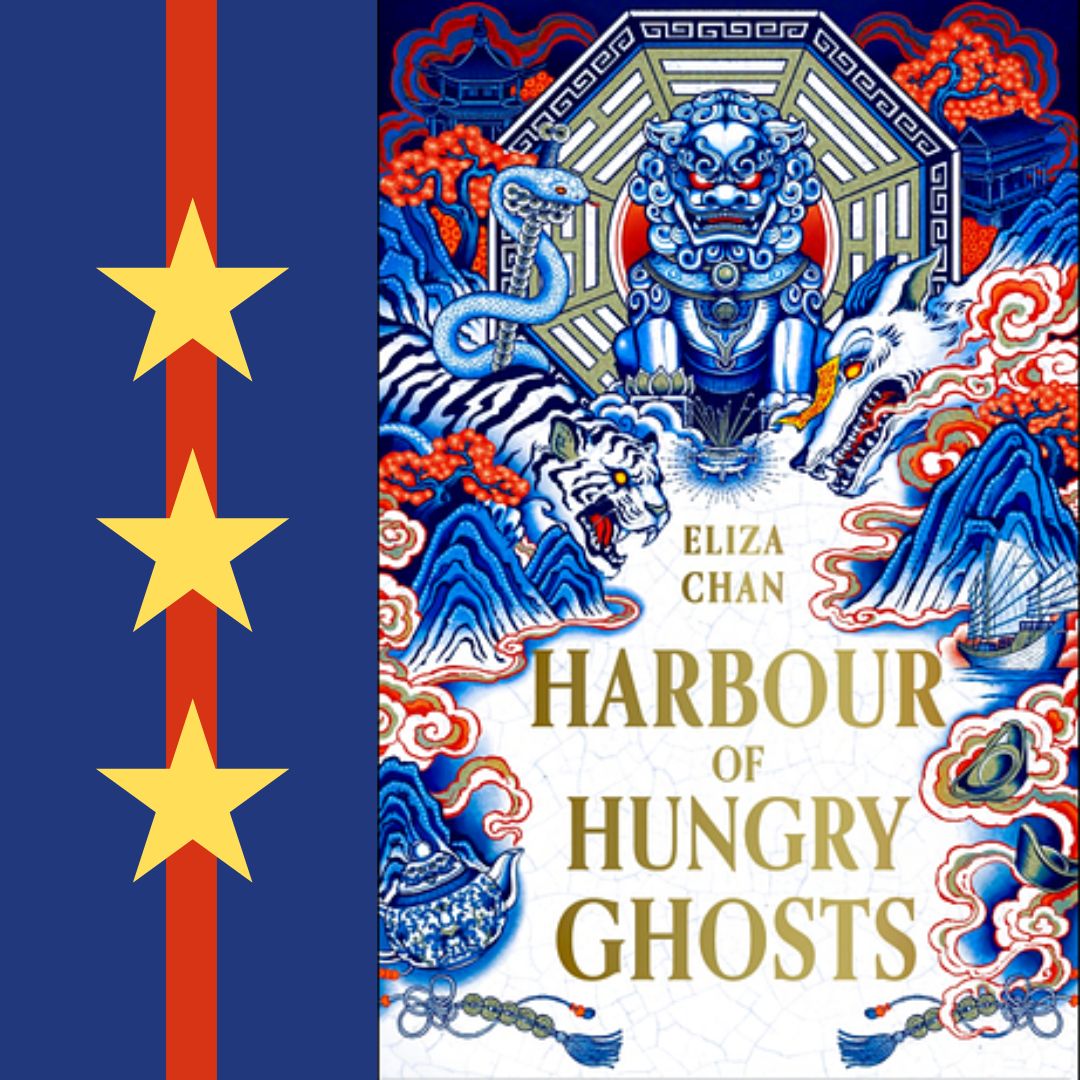

Au Kiamling may be one of the most stubborn characters I’ve ever encountered in fiction. She’s so mule-headed, in fact, that one of the primary catalysts for the plot of Eliza Chan’s Harbour of Hungry Ghosts, is her battle of wills with her grandmother over whether or not Kiamling is ready to start taking on a larger part of her family’s work. The two can barely have a conversation without an argument breaking out. In this novel, we see what happens when Kiamling finally gets a chance to take charge after a catastrophic incident during the Hungry Ghost Festival. I’ll be honest. I am conflicted in my feelings about this book. There is a lot in this book to like! On the other hand, there are some things that bothered me so much that I considered quitting before I finished. Readers, your mileage might vary with this book.
The Au family are notorious as the only women serving as demon-hunters and intercessors with the spirit world. They lived in Canton (Guangzhou) before Kiamling and her sister, Jingling’s parents were killed during a battle with members of the Taiping Rebellion. (I’m being deliberately vague because what happened and who did what is a plot point later in the novel.) Now established in British-controlled Hong Kong, Kiamling’s grandmother dispenses blessings and deals with supernatural mayhem. We even meet Kiamling and her grandmother as they escort the dead from their original graveyard to a new one, after the land was claimed by the British for a new police station. Kiamling chafes at her long apprenticeship and her anger grows every time her grandmother tells her that she’s not ready.
Kiamling gets her opportunity to take the lead when her grandmother goes missing after a ghastly attack by hungry ghosts and restless dead during the Hungry Ghost Festival. Without her grandmother, Kiamling can finally start doing things the way she wants to do them. This goes about as well as one might expect. There are reasons, after all, why you can’t just take the easy way. If you don’t deal with things the proper way, you end up with lots of hungry ghosts and revenants, forests in unexpected places, and angry customers. This is an area where Chan excels. The development of Kiamling, Jingling, and their grandmother, as we learn more about each character, is brilliantly paced.

The other area where Chan shines is with the central mystery about what happened to Kiamling’s grandmother and why her family’s magic seems to be failing. The old methods Kiamling are losing their effectiveness. She is also seeing supernatural creatures that don’t match anything she’s ever seen or studied. I don’t want to give away what’s going on her, but I was fascinated by what Chan conjured up. The ending of Harbour of Hungry Ghosts is absolutely spectacular.
Chan explains up front in a short note that she plays fast and loose with actual history in Harbour of Hungry Ghosts, moving people and events around to fit around the narrative. Given that there are ghostly zombies in the first chapter, I wasn’t too fussed about historic fidelity. What did bother me were the efforts to shoehorn in actual history in perhaps the clumsiest way I’ve ever seen: Kiamling overhears British officials essentially giving away their government’s role in starting the Opium Wars. I felt cheated of the chance to learn (in a less blindingly stupid way) at least part of the motivations of this book’s villains. Yes, I know a bit about the Opium Wars, but our protagonist just happened to hear two dudes just chatting about it in the hallway! I was also bothered by repetition early in the book and potted exposition that, again, denied me the chance to piece things together on my own. This particularly bothers me as a reader because I get a lot of joy mentally racing the protagonist to the solution. I have fun even if I’m wrong.
I’ve noticed more repetition and increased explanations (rather than the author giving details for us to work with as we learn the world of the story) in recent fiction. When I started reading Harbour of Hungry Ghosts, I actually wondered if I hadn’t noticed that the book was intended for a younger audience. I’ve chatted with a few of my bookish friends about this and I know I’m not the only one who’s noticed this. Authors, please trust your readers to figure things out without having our hands held.
I received a free copy of this book from the publisher via NetGalley, for review consideration.