
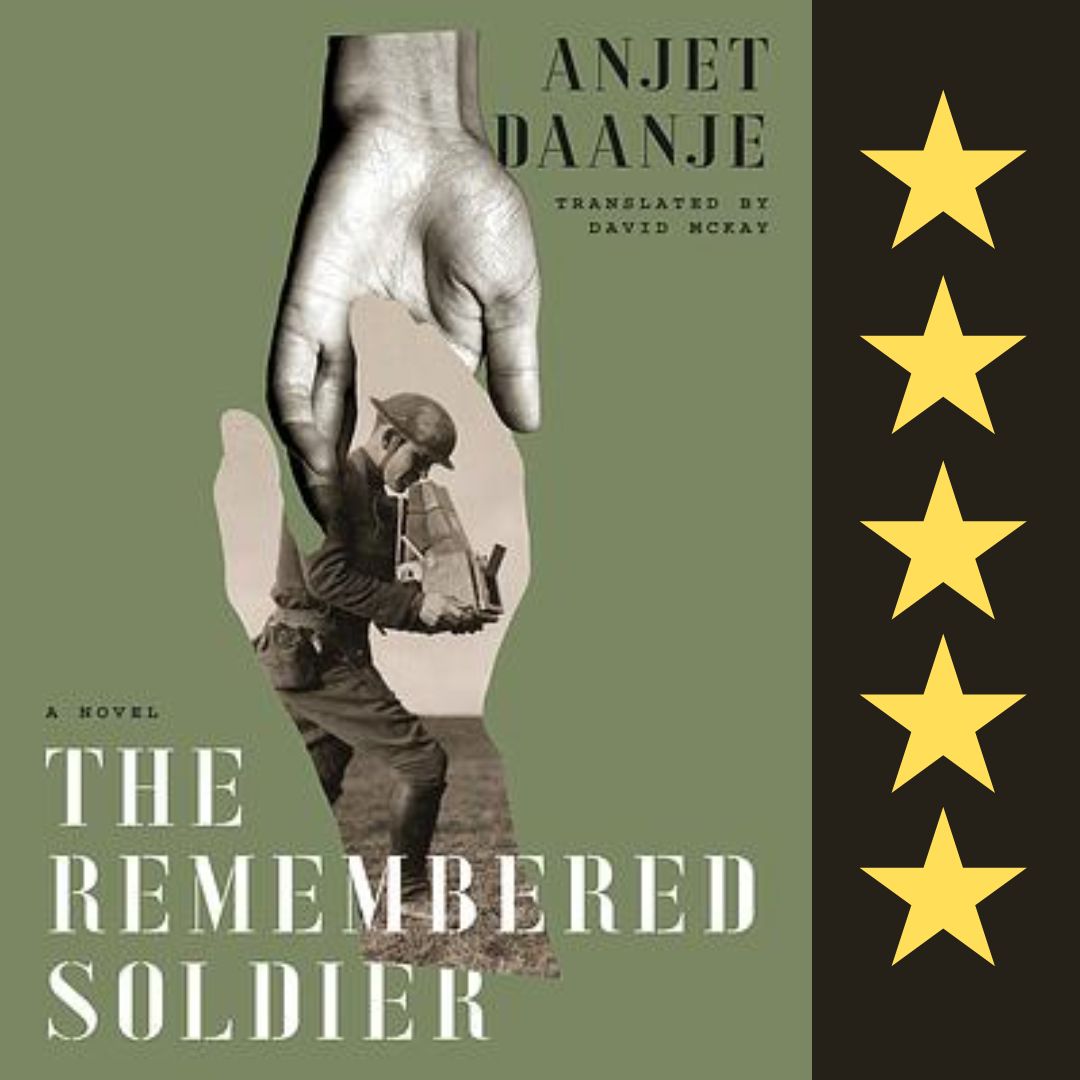

Noon Merkham does not know who he is. The name he bears is just a combination of the time he was found and the nearest town where he was found. And for the rest of The Remembered Soldier, a beautiful and deeply moving novel by Anjet Daanje, he will wonder who he was before he lost his memory somewhere on the Belgian portion of the Western Front. David McKay does a brilliant job translating Daanje’s novel.
We meet Noon in 1922, in a hospital for soldiers in Ghent. Physically, he’s well; he just can’t remember anything that happened since he was found near the end of the war. Now, he gardens. He helps his comrades ward off nightmares in the night. But he is less sanguine about his constant meetings with women who might be his mother or his wife. Even in 1922, so many women hold out hope that their lost ones might’ve survived the trenches. One of these is Julienne Coppens. Julienne is convinced that Noon Merkham is her husband, Amand, who went missing in late 1917 or early 1918. (Because Belgium was occupied by the German Army for much of the war, it was very hard to get mail back and forth between civilians and the Belgian armed forces.) Noon is surprised at how familiar Julienne is. She even knows about a scar hidden by his hair. Julienne convinces Noon (now Amand) and the doctors to let him go back with her to Kortrijk, to see if being with family will help his memories come back.
Except, those memories—apart from a vague sense of familiarity about Julienne—don’t return. The children don’t recognize him. He doesn’t remember how to operate a camera, even though he was supposed to have been a photographer before he enlisted in 1914. He definitely doesn’t remember the house where Julienne and the kids live. Julienne has to tell him that their extended family are dead, either due to illness or bombs. And his nights often filled with nightmares about vague memories of the trenches, gas, and machine gun fire. It’s a lot to deal with, and yet, Amand endures by trying to be helpful. Julienne also helps him cope by waking him from his nightmares. She tells him stories about their lives before the war separated them.
Doubts remain, however. Although he feels happy with Julienne, even loves her, he wonders about a German woman in his dreams. Is he Julienne’s husband after all? Are the dreams fodder for the psychiatrists he left behind at the hospital in Ghent? Are we really just the stories we tell about ourselves? Daanje never lets us forget these questions even as we see Amand build a comfortable life with Julienne. The entire novel is written in prose: Amand and Julienne’s streams of consciousness. The dialogue is all indirect reported speech. More than once, Julienne is revealed to have rewritten the past, either because it makes a better story or so that her amnesiac soldier won’t learn about things she’s ashamed of. Later in the novel, as Amand starts to dissociate, he asks Julienne to take photos of the two of them so that he won’t forget how happy they are together. He even writes a letter to his dissociated self, to remind this part of his mind that he loves Julienne.
The end of The Remembered Soldier is both devastating and hopeful. This sounds like an impossible combination, but Daanje manages it with a profoundly emotional twist and a courageous choice Amand has to make. This is the kind of book that will have readers crying for more than one reason as they read. Between the ingenious way Daanje wrote the book and its psychological impact (especially the impact of the conclusion), I think The Remembered Soldier is one of the best World War I books I’ve ever read. It explores the experience of a wounded soldier and the complications of returning from war in such a moving, original manner; I’ve really never read anything like this before and I’ve read a lot of World War I literature. I’m going to feel this book for a long time.

wow, it looks great! This theme has been used in many art forms (The wife of Martin Guerre, or the return of the soldier…) but still fascinating. I’m adding it to my TBR.