
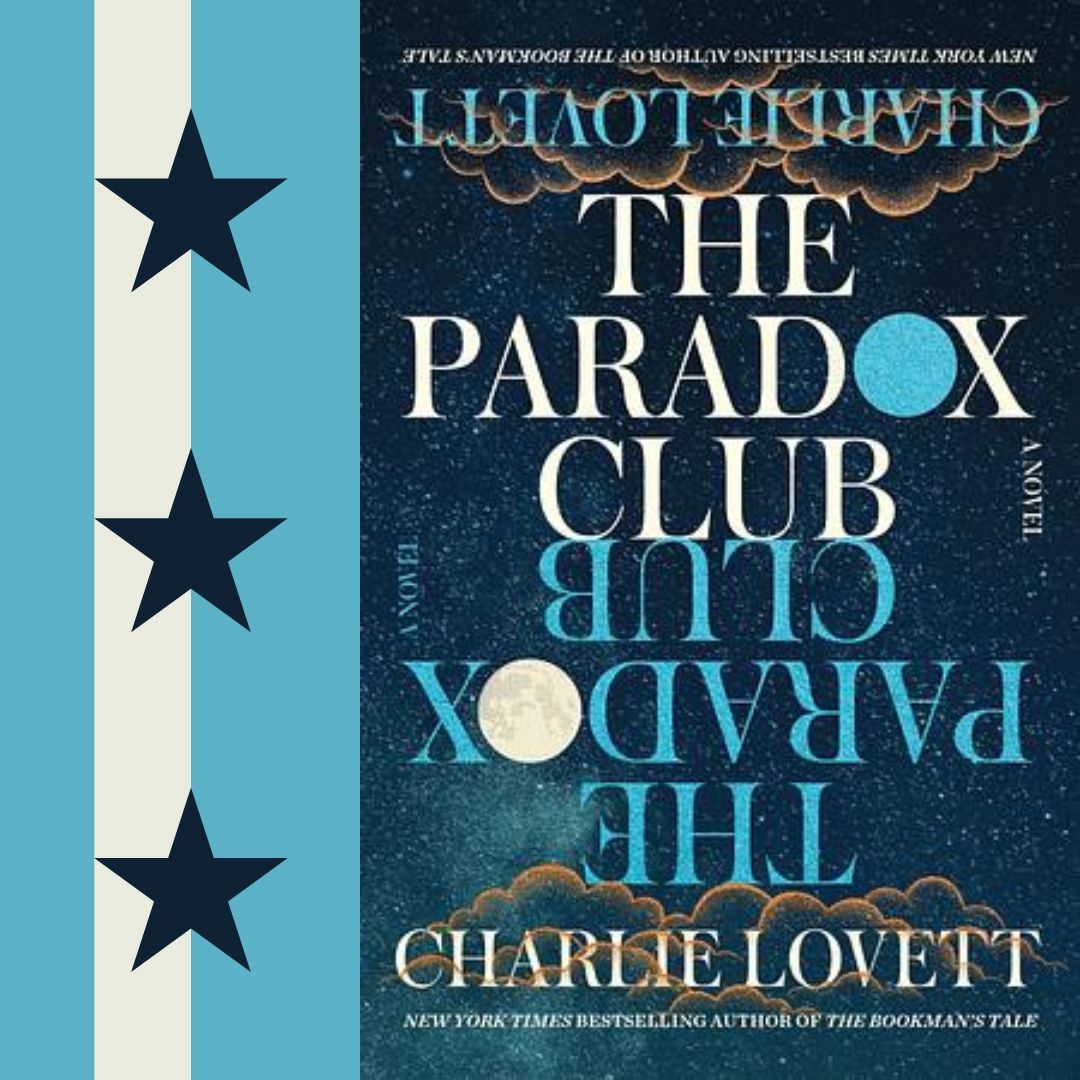

Some family secrets are stranger than others. Tess Maxwell has no idea what she’s about to discover about her family in Charlie Lovett’s off-the-wall new novel, The Paradox Club, when she decides to get back in touch with an old family friend after taking a leave of absence at her college. The secrets the Maxwell’s hold have the potential to change science as we know it. These secrets might get all of the surviving Maxwells killed.
In chapters that move back and forth between the last summer Tess spent with her father and the present, we slowly learn about the mysterious Paradox Club and the strange discoveries they’ve made since their founding. Tess’s father, Harry, was one of the smartest members of the club. He used to bond with his daughter by explaining multiple universes, time dilation, and other mind-bending concepts. Young Tess didn’t know what Harry gets up to in his spare time, though she recognizes that he shares a secret with “Aunt” Vivian. That last summer culminates in a devastating fire that kills Harry and splinters Tess’s small family.
In the present, Tess suffers from obsessive compulsive disorder and anxiety. Her mother barely talks to her and Vivian is the only family Tess has. In fact, Tess’s mother, Marie, is ready to leave the family home and marry someone new after all these years. When Tess stops by for a courtesy visit, Marie gives Tess Harry’s old books (and some hurtful words). The books at least give Tess something to do to stop herself from fretting about her OCD and Marie. She starts to sort them, only to discover that Harry might’ve left a message for Tess to find. Tess’s busy mind latches on to Harry’s last message, hoping for answers about how her father died.
Other chapters are told from the perspectives of the aging president of the Paradox Club, Richard, and his nemesis inside the club, Pilgrim, a woman who is willing to commit felonies (or direct her minions to commit felonies) to discover Harry’s secrets. Richard and Pilgrim’s chapters run parallel to Tess’s present, setting up some dramatic chases and confrontations as the plotlines intersect. Regrettably, Pilgrim only has one-note as a villain. I found her hard to take seriously no matter what evils she orders her goons to do. Pilgrim believes that Harry discovered something momentous, something that will make her more famous than Darwin or Newton. And that’s it; that’s her entire motivation. There’s no revenge or plans to become an evil overlord. Pilgrim just wants credit for Harry’s discovery.
There were things I liked about The Paradox Club. I was amused by the small what-if references littered throughout the novel. And I found Tess and Harry’s relationship touching. While I give this book a lot of points for originality, I was a little bored by the villain, who could’ve used a few more dimensions and/or should’ve been more hands-on in her villainy to make her more interesting. The ending was also rushed. Given how amazing Harry’s discovery was, I wish we’d had more of a chance to experience it. Instead, we get a big light show and a mere glimpse of the other side.
I received a free copy of this book from the publisher via NetGalley, for review consideration.