
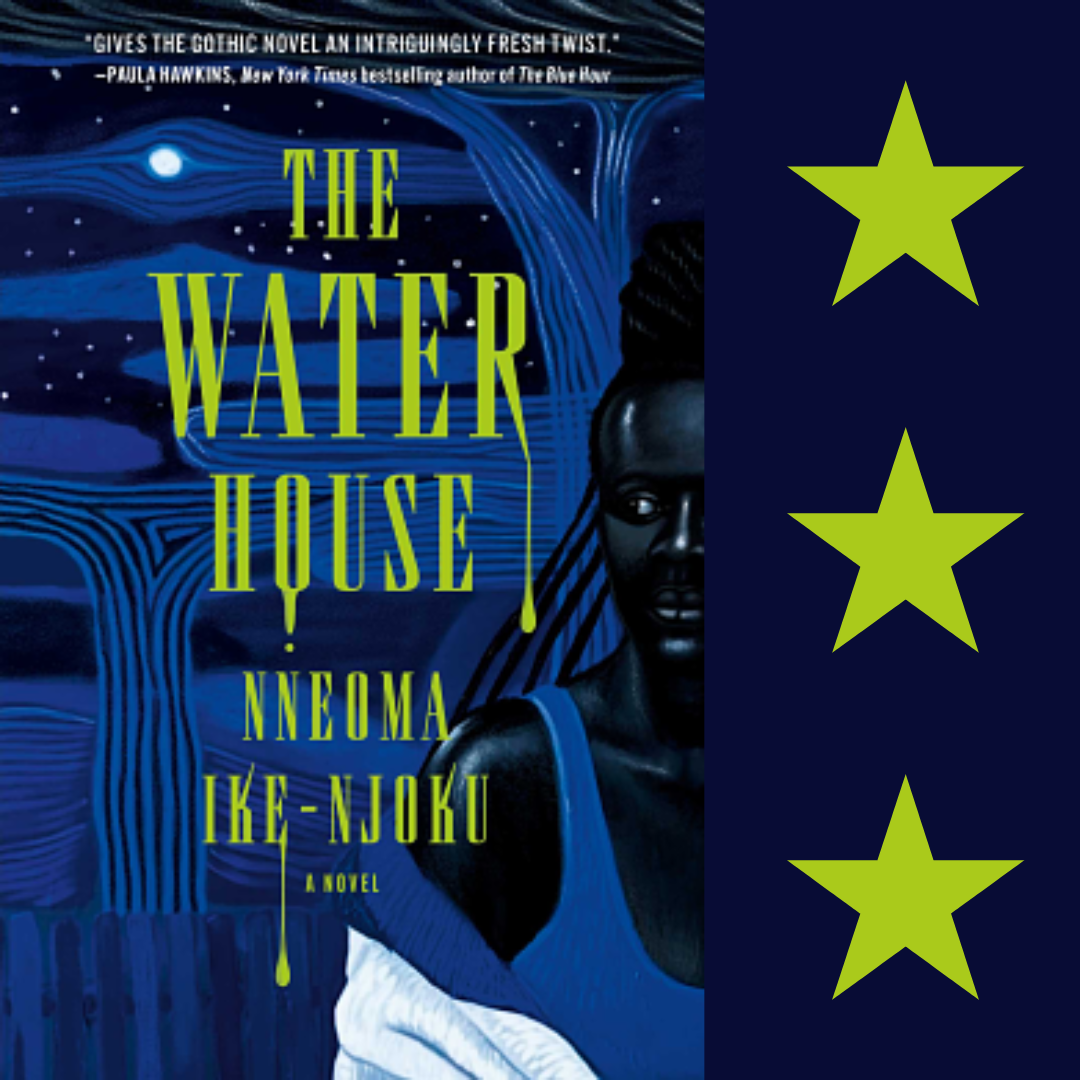

Celia has spent most of her life exiled from the Nigerian island where she grew up. She was sent away to a lackluster boarding school after her brother drowned near their home. Even after she graduated, Celia’s mother has made it clear that she’s not welcome home. But after a marriage proposal goes wrong, Celia returns to the island. Nneoma Ike-Njoku shows us what happens next in her affecting novel, The Water House.
So many people have failed Celia—her mother, her teachers, her first employers—that it’s little wonder that our protagonist doesn’t really know how to strike out on her own. The boarding school where Celia was sent after her brother’s death was more of a place to house unwanted daughters than an actual educational facility. Not terribly surprising, given that the name of the places is St. Agnes School for the Training and Education of Delinquent Girls. When Celia graduates and is offered a job teaching typing at the school, she knows hardly more than her pupils. And when she learns that the school is is going to be shut down, Celia finds herself in even more dire straights. Thankfully, luck finally smiles on Celia in the form of Madam Dudu. Dudu doesn’t seem to care that Celia’s words per minute rate is abysmal, as long as Celia works late to finish her daily quota. Dudu even manages to arrange a match for Celia with a rising politician.
All the while, Celia is holding on to a dark secret. Celia’s mother has always blamed Celia for the death of her son. When word of that secret leaks and ruins her engagement, Celia returns to the Water House, the home where she lived before everything went wrong in her life. It’s little wonder to me why Celia was so reluctant to return. Her mother is cold, depressed, and hostile. Worse, memories Celia has suppressed for years start to surface. Ike-Njoku creates such a sinister atmosphere that I honestly had my heart in my mouth for most of the book, worrying about what would happen to Celia next.
The Water House is all about that atmosphere and it takes careful reading to figure out where in Nigeria this book is set or that it takes place before and during the early part of the Nigerian Civil War. (For the longest time, I wasn’t sure when this book was set other than it was after the widespread use of typewriters but before the invention of the cell phone.) These kinds of details don’t really matter, however. The introduction of details about what’s going on off of the island would ruin the sense of sinister isolation that Ike-Njoku develops. Further, lack of detail about the past and present lets this book play around a lot with unreliable memories and the way that we can rewrite our own pasts, given enough motivation.
I received a free copy of this book from the publisher via NetGalley for review consideration.