
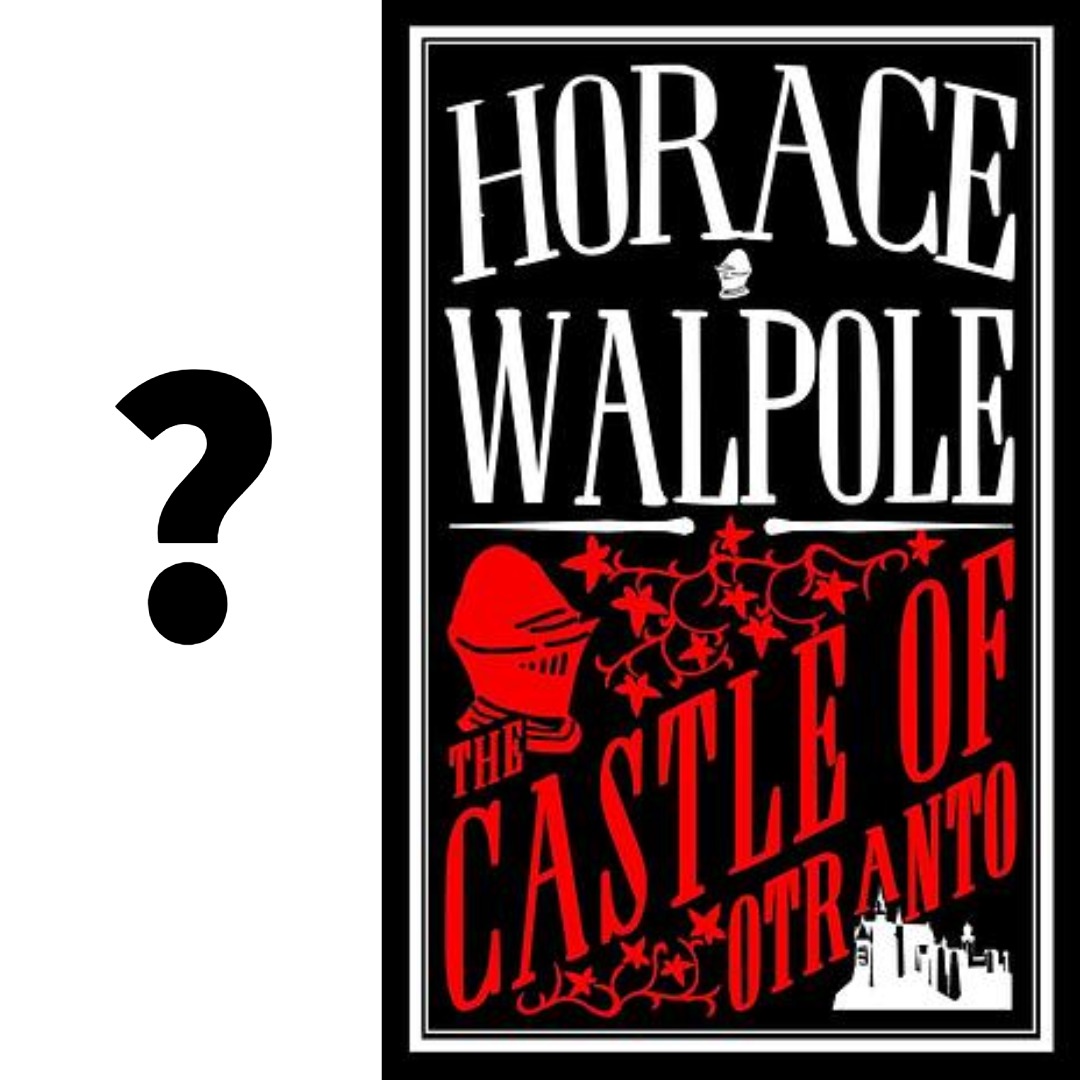

I have no idea how to rate The Castle of Otranto, the novel by Horace Walpole that marks the start of the Gothic genre. It is one of the funniest things I have ever read. It was so funny that my cats gave up sitting on my lap while I was reading it because I kept bursting out into laughter. But what made this book so hilarious to me is the ludicrous plot and overwrought dialogue. This book reads like a parody that, as far as I know doesn’t have an antecedent. I’m glad I read this book, silly as it is, because not only was I vastly entertained, it also let me take a peek at the birth of tropes about hidden passageways, ghosts, divine revenge, and more.
Earlier this month, I re-read Northanger Abbey, one of my favorite Jane Austen novels, to get into the spooky season spirit. It occurred to me that I had never read the Gothic classics Catherine Morland gushes about; I’ve only read Gothic novels in their Victorian and twentieth-century incarnations. I thought I knew what I was getting into when I downloaded a copy of The Castle of Otranto (1764) from Project Gutenberg but there was no way I could’ve prepared for the appearance of a giant helmet falling out of the sky and killing off a character in the very first chapter. I ended up having such a good time reading the short novel that I live posted my way through it on Bluesky (mostly spoiler free).

This book is not a shining gem of prose. The plot races along so quickly that I suspect Walpole didn’t want us to notice the gigantic plot holes. Readers who are curious about the plot can read through the plot summary on Wikipedia (linked via the book cover image in this post), though I was able to get through the novel in an evening. The characters have no development and never act with realism; several stab first and ask questions later. The supernatural elements struck me as hilarious rather than even slightly spooky. Still, I highly recommend reading it, because The Castle of Otranto really is one of the funniest things I have ever read. Usually it takes something by Terry Pratchett or Mel Brooks to get me going the way that this book did.
After I finished the book, I had to do some research to try and answer my biggest questions about The Castle of Otranto: Was Walpole trying to be funny? If he was writing a parody, what was he parodying? Thanks to Dr. Natalie Neill’s chapter on Gothic parody (in Romantic Gothic: An Edinburgh Companion, edited by Angela Wright and Dale Townshend, Edinburgh UP, 2015, pp. 185-204) and some literature professors on Bluesky, I have an answer to at least one of my questions. Dr. SpookyGoth shared a quote from a letter Walpole wrote that helped me settle the question: “If I make you laugh, for I cannot flatter myself that I shall make you cry, I shall be content.” Further, Dr. Neill noted a strong streak of self-parody in the early Gothic novels, which she argued was an effort by the novelists to pre-empt criticism of the more hysterical (in both senses of the word) elements of their books. Because Otranto is the first of it’s kind, there wasn’t anyone for Walpole to parody (as far as I know). Between Walpole’s sense of humor and Dr. Neill’s scholarship, I think Walpole was aiming more for our funny bone rather than at raising goosebumps.