

My journey into the earliest Gothic novels continues with The Mysteries of Udolpho (1794), by Ann Radcliffe. Like The Castle of Otranto, The Mysteries of Udolpho is a landmark book in the genre. Unlike Walpole’s madcap tale, Radcliffe’s book is slow, serious, and much more fleshed out in terms of characterization and plot. Radcliffe takes us on a journey from innocence to folly and vice and back to love and wisdom through the adventures of Emily St. Aubert, a young woman of limited means and an infinite ability to cry without becoming dehydrated.
I’m not going to summarize the novel here. (The link in the first paragraph goes to Wikipedia, which has an excellent synopsis for the curious.) Instead, I want to share some of the thoughts I had while reading this book.
Reading an eighteenth-century novel is always an interesting experience because the form hadn’t fully settled into the form we expect now. We’re just not used to poetry breaks in the middle of chapters or the way the characters emote via fainting, weeping, and long speeches. We’re used to plots that follow the structure of rising action, climax, and denouement. The Mysteries of Udolpho is full of poetry and speeches (and fainting and weeping) and meanders through a series of episodes in which Emily is trapped by various people who want to marry her off or get their hands on her inheritance.
As I read this novel, I often compared it to other Gothic novels written in the nineteenth and twentieth centuries. Later novels capitalize on the supernatural as well as human evil to create tales of horror to delight and terrify their readers. The Mysteries of Udolpho, however, undercuts its Gothic elements by providing ordinary explanations for all of the spooky things that happen in the novel. Even the mad nun has a perfectly rational backstory to explain her rantings. When a character disappears from a supposedly haunted chamber, it turns out he was kidnapped by bandits who’d been using the previously abandoned chateau to stash their loot. Even the Castle of Udolpho, from which the book takes its name, only serves as the setting for about a third of the novel and mostly just serves as a jail for Emily while her uncle-in-law tries to get her to sign over her inheritance.
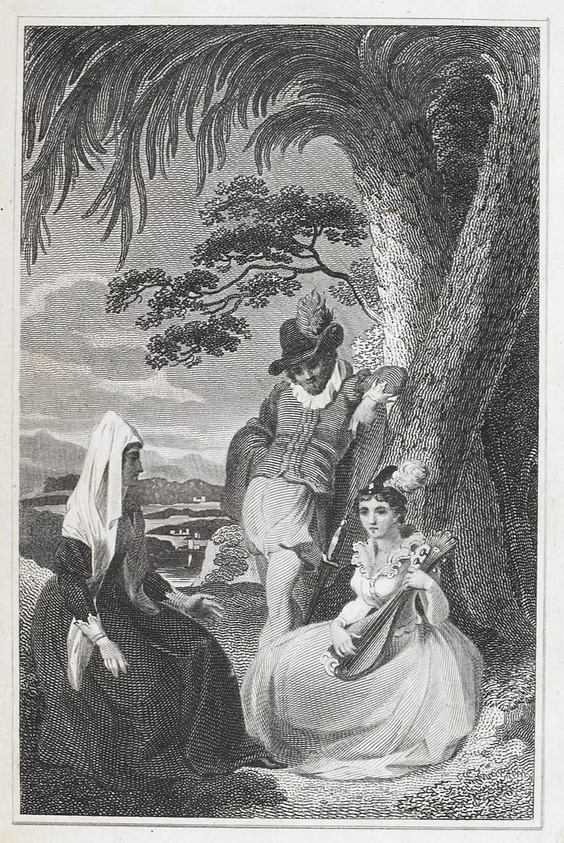
In addition to the sometimes disappointing (to modern readers) plot, Emily is the sort of character to whom things happen, rather than one who makes things happen. It can get frustrating to read about her travails without wanting to yell at her and/or toss the book across the room. That said, there are some truly swoonworthy passages about the natural beauty of Gascony, Languedoc, and the Apennine Mountains of Italy. Emily and her father are often in raptures about the majesty of the Pyrenees as they travel across southern France, the stately forests, and so on. Later, Emily frequently turns to nature (often viewed through a window) for comfort while humans scheme, carouse, and commit various acts of villainy. Music is a close second to nature as a source of emotional relief for our heroine, but Radcliffe isn’t as expressive about this (and, to be far, it’s hard to write about the feelings evoked by music) as she is about nature. It’s easy to see how Gothic novels inspired the Romantics’ ideas about nature and pure emotion.
I’m glad I read The Mysteries of Udolpho, even though it wasn’t nearly as entertaining as The Castle of Otranto. I can see how readers at the time would’ve been hooked to the twists and turns of the plot, as well as transported by the descriptions of countryside that they might never have had a chance to see for themselves. Also, reading such early examples of Gothic literature strikes me as looking at the genre’s baby pictures, before the genre grew into the fascinating creature it would be come in the hands of later writers.